Compliance

HIPAA

Strengthen HIPAA Compliance with Identity Governance Controls
Automate access reviews, enforce least privilege, and maintain audit-ready access controls across systems handling ePHI.
Trusted by












What is HIPAA Compliance?
The Health Insurance Portability and Accountability Act (HIPAA) is a U.S. regulation designed to protect sensitive patient health information (ePHI). It requires healthcare organizations and their partners to implement strict administrative, technical, and physical safeguards to ensure data privacy and security. This helps organisations prevent data breaches, maintain patient trust, and avoid financial penalties while ensuring secure handling of health data.
Why do you need to comply with HIPAA?
HIPAA compliance ensures that sensitive health data is protected from unauthorized access, misuse, & breaches. Without proper identity governance, organizations face excessive permissions, weak access controls, and audit challenges.

Excessive & Risky Access Detection
Identify over-privileged users and risky entitlements across systems storing ePHI data.

Unmonitored Privileged Access Control
Track and control privileged access to healthcare systems to prevent unauthorized exposure of patient data.

Incomplete Access Reviews & Audits
Ensure periodic validation of access to ePHI systems and maintain audit-ready records for HIPAA compliance.

Unmanaged Identity Lifecycle Risks
Ensure timely access provisioning and revocation as roles change across healthcare systems.

Lack of Centralized Access Visibility
Gain a unified view of who can access ePHI across healthcare applications, systems, and environments.
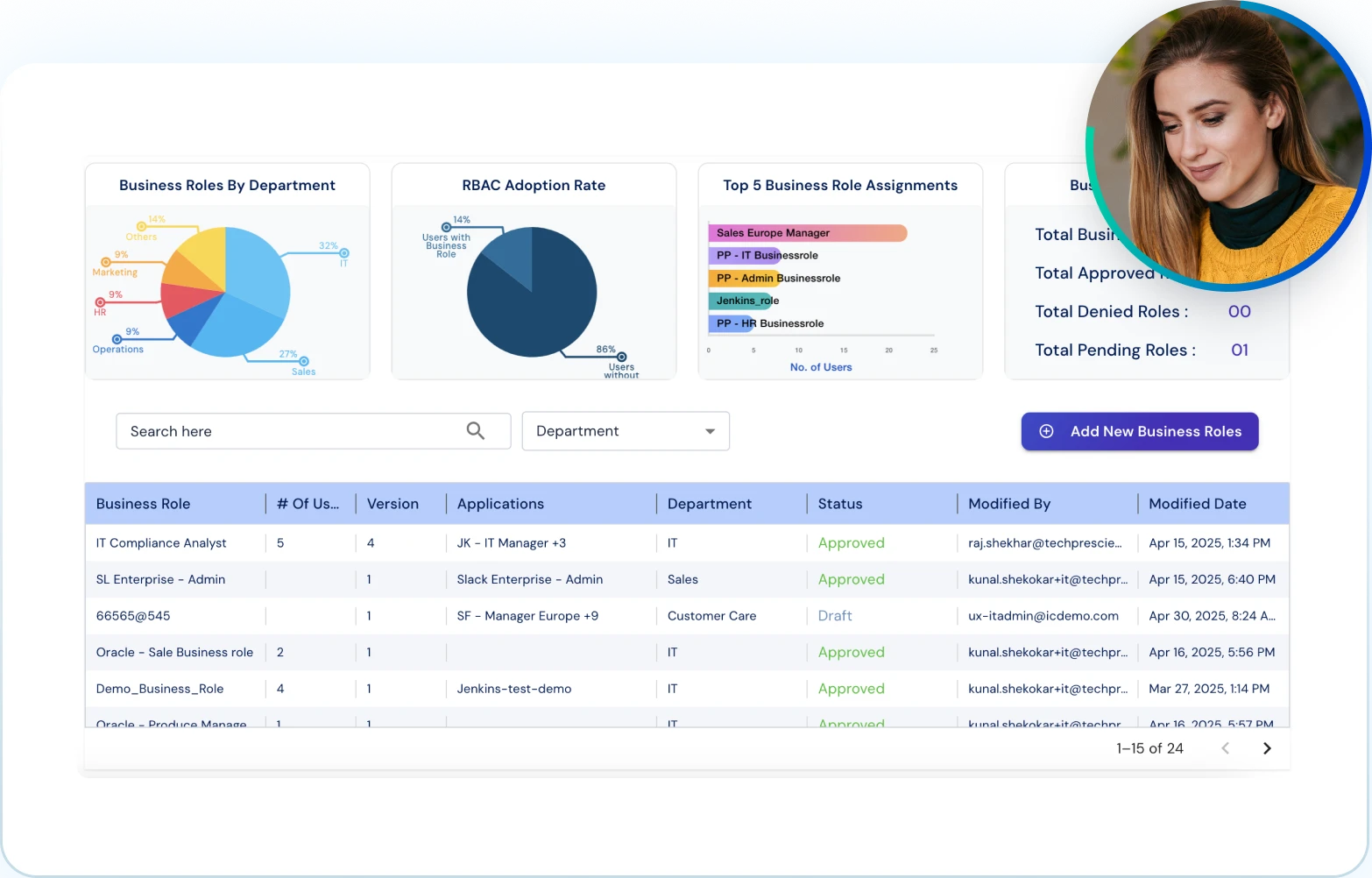
Automated User Access Reviews
Get a complete overview of identity governance, compliance controls, and audit-ready access certification capabilities.
HIPAA Safeguard Mapping
Identity governance establishes the controls required to meet HIPAA administrative, technical, and access-related safeguards by ensuring consistent access management, visibility, and policy enforcement across ePHI systems.
Administrative Safeguards – Workforce & Access Governance
Ensure only authorized personnel can access ePHI through controlled onboarding, role-based access assignment, and timely access removal as responsibilities change. Maintain continuous oversight of user activity and access changes to reduce the risk of unauthorized exposure and ensure accountability.
Information Access Management
Control access to sensitive healthcare data by defining and enforcing policies that govern how identities interact with applications, systems, and data. Limit access based on roles and responsibilities to prevent excessive permissions and reduce exposure to sensitive information.
Security Management Process
Continuously identify and assess identity-related risks across systems storing ePHI, including excessive access, unused entitlements, and policy violations. Enable proactive remediation of access risks to reduce vulnerabilities and strengthen overall security posture.
Audit Controls & Monitoring
Maintain a complete record of access activity, changes, and decisions across systems to support audit requirements. Ensure access reviews and certifications are performed regularly, with clear visibility into who has access to what and why.
Access Control & Authentication
Ensure only verified and authorized identities can access sensitive systems through strong authentication and controlled access policies. Restrict access based on context, roles, and defined policies to enforce least privilege across environments.
Lifecycle & Access Provisioning Controls
Ensure access is granted accurately during onboarding, updated as roles change, and removed immediately when no longer required. Reduce manual errors and delays in access management by maintaining consistent and governed identity lifecycle processes.
Incident Response & Risk Mitigation
Identify unusual access patterns, anomalies, and policy violations early to reduce the impact of potential security incidents. Enable faster response to identity-related risks by maintaining visibility across users, systems, and access activity.
How Tech Prescient helps you achieve HIPAA compliance and audit readiness
Establish governance processes to control how identities access ePHI across systems and roles.
Establish governance processes to control how identities access ePHI across systems and roles.
Protect access to systems and devices handling sensitive healthcare data.
Enforce access controls, monitor activity, and maintain audit-ready systems for compliance across systems storing, processing, and transmitting ePHI.


HIPAA Compliance Playbook
Get a complete overview of identity governance capabilities for HIPAA compliance.

Assess your identity security posture
Walk through Identity Confluence capabilities
Get tailored compliance recommendations
Disclaimer: The complete implementation of HIPAA requires a combination of policies, processes, technologies, and people. The solutions mentioned here support compliance requirements but do not constitute legal advice. Organizations should consult legal experts for full HIPAA compliance.