




On this page
See Tech Prescient in Action
Automate access, reduce risk, and stay audit-ready
Most cyberattacks succeed not because systems are weak, but because people are unprepared. Cybersecurity awareness training is the process of educating employees to understand, identify, and avoid cyber threats, to reduce human risk and prevent harm to both the organization and its stakeholders.
As cyberattacks become more sophisticated, organizations must ensure their workforce is prepared to recognize and respond to evolving threats. Human error contributes to nearly 95% of cybersecurity incidents, which is why cybersecurity awareness training is essential in reducing human risk.
Employees interact with emails, applications, and sensitive data every day. Without proper awareness, simple actions, such as clicking a phishing link or reusing passwords, can lead to serious security incidents.
In this blog, we'll explain why cybersecurity awareness training is important, how it reduces human risk, and the key benefits for preventing breaches.
Key Takeaways
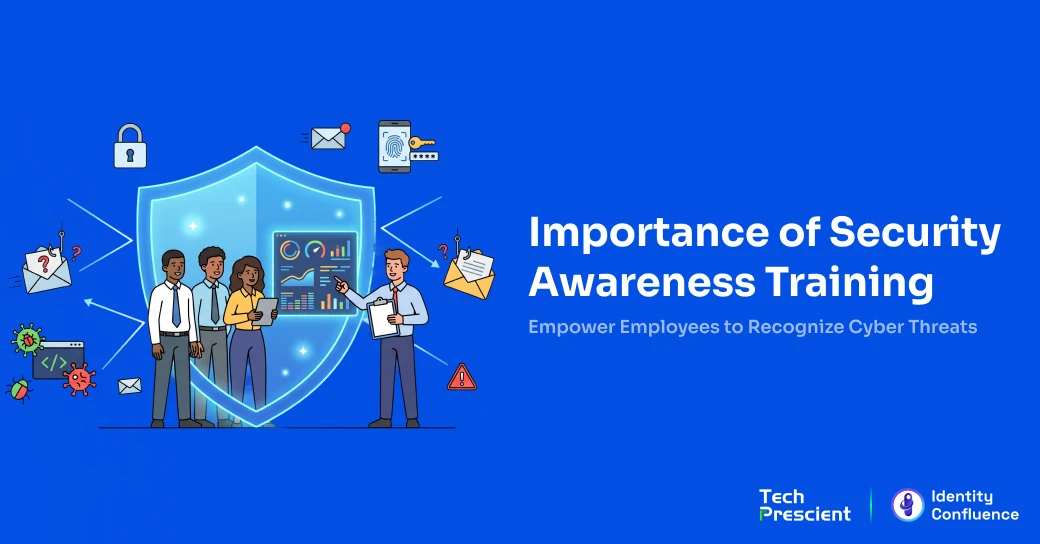
- Human error is a leading cause of cybersecurity breaches
- Cybersecurity awareness training helps reduce phishing and social engineering risks
- Trained employees act as an additional security layer across the organization
- Continuous training improves detection, response, and overall security posture
What Is Cybersecurity Awareness Training?
Cybersecurity awareness training teaches employees how to recognize threats, protect sensitive data, and behave securely in everyday digital activities.
It is a structured program that focuses on practical behaviors, such as identifying phishing emails, using strong passwords, and handling data securely. These actions directly reduce risk in day-to-day operations.
The importance of security awareness training lies in addressing the human element of cybersecurity. While technical controls such as firewalls and antivirus protect systems, they cannot prevent user mistakes. Training ensures employees understand how their actions impact security and how to respond correctly.
Unlike technical controls, awareness training acts as a human defense layer. It equips employees to detect suspicious activity, avoid risky behavior, and report incidents early before they escalate.
What Cybersecurity Awareness Training Typically Covers
- Recognizing phishing emails and social engineering attempts
- Creating and managing strong passwords
- Safe browsing and email practices
- Secure handling of sensitive data
- Identifying and reporting suspicious activity
By focusing on real-world scenarios, cybersecurity awareness training helps employees move from passive users to active participants in protecting the organization.
Why Is Cybersecurity Training Important for Organizations?
The modern digital landscape is constantly exposed to cybersecurity threats that pose significant risks to businesses of all sizes. As attack techniques become more complex and harder to detect, it becomes critical for organizations to prioritize cybersecurity training for employees.
Without proper training, employees can unknowingly fall victim to phishing scams, malware, or social engineering attacks. These incidents often lead to data breaches, financial loss, and operational disruption.
Most successful breaches still begin with a simple human action, clicking a malicious link, sharing credentials, or granting unintended access. While organizations invest in advanced security tools, attackers frequently bypass them by targeting user behavior instead of systems.
This is why cybersecurity training is essential. It ensures employees can recognize threats, make informed decisions, and act as a strong first line of defense rather than the weakest link.
1. Employees as the First Line of Defense
Employees are not just users; they are part of the security system. When trained, they can recognize suspicious activity, avoid risky actions, and report threats early. This is one of the key reasons why cybersecurity training is important; it turns everyday interactions into security checkpoints.

Expert Insight:
Most organizations invest in tools to detect attacks, but attackers target the one layer that's hardest to control: human behavior. Without training, even the best security stack can be bypassed through a single successful phishing attempt.
2. Rise of Phishing, Ransomware, and Social Engineering
Modern attacks rely heavily on deception rather than technical complexity. Phishing emails, fake login pages, and impersonation tactics are designed to trick users into giving access. Training helps employees identify these tactics and respond correctly before damage occurs.
3. Remote and Hybrid Work Risks
With remote and hybrid work, employees access systems from different locations, networks, and devices. This increases exposure to threats such as unsecured Wi-Fi, personal devices, and unmanaged environments. Cybersecurity training ensures employees understand how to work securely outside traditional office environments.
Build a Cybersecurity Training Program That Actually Works
Use this blueprint to design training that reduces phishing and human risk.
Risks of Ignoring Cybersecurity Awareness Training
Organizations that ignore cybersecurity awareness training face a higher risk of breaches because attackers exploit human behavior, not just systems.
Understanding why cybersecurity training is so important becomes clear when looking at how breaches actually happen. Without training, employees are more likely to fall for common attack methods, delay reporting incidents, or unknowingly expose sensitive data.
These risks are not isolated; they often combine, increasing the overall impact of a security incident.
1. Phishing and Email-Based Attacks
Phishing attacks are designed to mimic legitimate communication, making them difficult to identify without proper training. Employees may receive emails that appear to come from trusted sources, prompting them to click malicious links or enter credentials into fake login pages. Once credentials are compromised, attackers can gain unauthorized access to systems and data. Without awareness training, these attacks remain highly effective and continue to be one of the most common entry points for breaches.
2. Social Engineering Exploitation
Social engineering attacks manipulate human psychology rather than exploiting technical vulnerabilities. Attackers may impersonate executives, IT staff, or vendors and create a sense of urgency to pressure employees into taking immediate action. This could include transferring funds, sharing sensitive data, or granting access. Without training, employees are more likely to trust these requests, increasing the risk of unauthorized access and fraud.
3. Weak Password and Device Practices
Poor password hygiene and unsafe device usage significantly increase security risks. Employees often reuse passwords across multiple systems, which allows attackers to gain broader access once a single account is compromised. Additionally, accessing organizational systems from unsecured or personal devices can expose sensitive data. These seemingly small gaps often become the starting point for larger attacks.
4. Unsecured Mobile and Unknown Devices
Unrecognized or unmanaged devices connected to the network create serious security risks. These devices may not meet security standards or may lack proper authentication, making them easy entry points for attackers. Cybercriminals can use such devices to introduce malware or ransomware into systems, leading to data breaches and operational disruption. Educating employees about the risks of connecting unauthorized devices and enforcing device security policies is critical to reducing this exposure.
5. Lack of Incident Reporting
Even when employees notice suspicious activity, delays in reporting can significantly increase the impact of an attack. Unreported incidents give attackers more time to move within systems, escalate privileges, and access sensitive data. Training employees to recognize and report threats immediately is essential for faster response and effective containment.
How Cybersecurity Awareness Training Impacts Employees
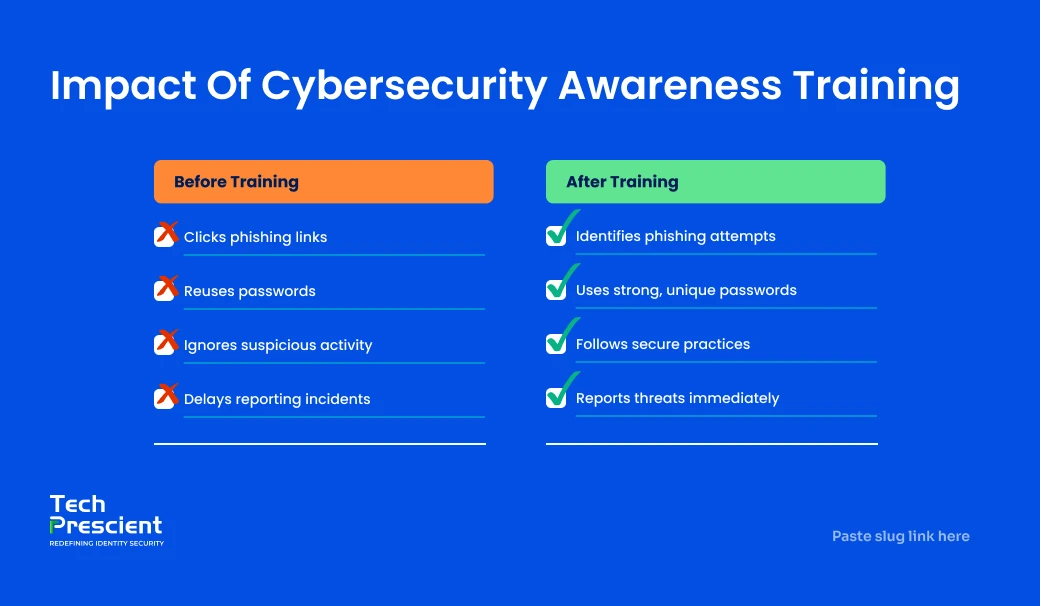
Cybersecurity awareness training is important because employees are the first line of defense, and often the first point of failure. It helps employees recognize threats, make better security decisions, and actively contribute to reducing organizational risk. When employees are trained, they are more aware of risks and more confident in handling everyday situations like suspicious emails, data sharing, or system access. This shifts employees from being a potential vulnerability to becoming an active part of the organization's defense.
1. Personal and Professional Benefits
Cybersecurity awareness training benefits employees both at work and in their personal lives.
- Helps protect personal accounts, devices, and data
- Builds awareness of common threats like phishing and scams
- Strengthens overall digital hygiene
This makes security training more relevant and easier to adopt.
2. Confidence in Identifying Suspicious Activity
Trained employees are more likely to recognize unusual behavior, suspicious emails, or unexpected requests. Instead of ignoring or misjudging threats, they can take the right action, whether that's avoiding a phishing attempt or reporting a potential issue early.
3. Shared Accountability for Security
Security is no longer limited to IT teams. Awareness training creates a shared responsibility model, where every employee plays a role in protecting systems and data. This improves overall security posture by ensuring that risks are identified and addressed across the organization.
Key Benefits of Cybersecurity Awareness Training
The benefits of cybersecurity awareness training go beyond preventing attacks; they improve response, reduce costs, and strengthen overall security culture.
Organizations that invest in training see measurable improvements in how employees handle threats, report incidents, and follow secure practices. These cybersecurity training benefits directly impact both security outcomes and business continuity.
The benefits of cybersecurity awareness training include:
1. Reduces Breaches and Financial Costs
Cybersecurity awareness training reduces the likelihood of successful attacks by helping employees recognize threats early. Fewer successful phishing attempts and credential compromises directly translate into lower incident response costs, reduced downtime, and minimized financial impact.
2. Mitigates Phishing and Social Engineering
Trained employees are more effective at identifying phishing emails and social engineering tactics. This leads to earlier detection of threats and faster reporting, which helps security teams respond before an attack can escalate.
3. Strengthens Incident Response
When employees understand how to respond to security incidents, response times improve significantly. Clear actions, such as reporting suspicious activity or isolating affected systems, help contain threats quickly and reduce overall damage.
4. Protects Brand Reputation and Trust
Preventing security incidents helps maintain customer confidence and trust. Organizations that avoid breaches are better positioned to ensure business continuity and protect their reputation in the market.
5. Ensures Regulatory Compliance
Cybersecurity awareness training supports compliance with regulations that require employee participation in security practices. It demonstrates that the organization is actively managing risk and aligns with frameworks such as PCI DSS, HIPAA, and GDPR.
What Happens Without Cybersecurity Awareness Training?
Organizations without cybersecurity awareness training are significantly more vulnerable to attacks. Without trained employees:
- Phishing success rates increase
- Credentials are more likely to be compromised
- Security incidents go undetected longer
- Recovery costs and downtime increase
This is why organizations that neglect training often experience repeated security incidents.
Why a Structured Security Awareness Program Matters
While training is important, its effectiveness depends on how it is designed and delivered. This is where a structured security education, training, and awareness program becomes critical.
The importance of a structured security awareness program matters lies in moving beyond one-time training sessions to a continuous, adaptive approach. Cyber threats change constantly, and a single training session is not enough to keep employees prepared. A well-designed program ensures employees are regularly updated, tested, and guided on how to respond to new and emerging risks.
1. Ongoing vs One-Time Training
One-time training sessions are often forgotten quickly and fail to create lasting behavioral change. Continuous training, delivered in smaller and regular intervals, helps reinforce secure habits and keeps employees aware of current threats. Ongoing programs also allow organizations to adapt training content based on new attack patterns and evolving risks.
2. Simulated Phishing Exercises
Simulated phishing campaigns help employees practice identifying real-world threats in a controlled environment. These exercises reveal how employees respond to suspicious emails and highlight areas where additional training is needed. Over time, simulations improve detection rates and reduce the likelihood of successful phishing attacks.
3. Role-Based Education
Not all employees face the same risks. Role-based training ensures that employees receive guidance relevant to their responsibilities. For example, finance teams may need training on invoice fraud, developers on secure coding practices, and IT teams on access management and monitoring. This targeted approach makes training more effective and practical.
Final Thoughts
Cybersecurity awareness training is one of the most effective ways to reduce human risk and prevent security incidents. Most attacks succeed because of human behavior, not technical failure. Without training, even strong security tools can be bypassed. Organizations that invest in continuous training build a stronger first line of defense and significantly reduce their overall risk.
Reduce Human Risk With a Structured Training Program
Plan, launch, and scale cybersecurity training with this practical blueprint.
FAQs
Cybersecurity awareness training is important because it helps employees recognize threats like phishing, avoid risky behavior, and respond quickly to incidents. Since human error is a major cause of breaches, training reduces one of the biggest security risks.
The importance of security awareness training for employees lies in helping them identify threats, handle data securely, and report incidents early. This reduces risk and improves overall security.
The key benefits of cybersecurity awareness training include reduced risk of breaches, improved detection of phishing and social engineering, faster incident response, and stronger compliance with security standards.
Cybersecurity training is important for non-technical staff because they are often targeted by phishing and social engineering attacks. Without training, they may unknowingly expose systems or data.
Cybersecurity awareness training should be conducted continuously, with regular refreshers and updates. Ongoing training ensures employees stay aware of new threats and maintain secure behavior over time.
Share



Rashmi Ogennavar
Content Strategist
A content strategist translating complex Tech and SaaS concepts into compelling narratives for business and technical audiences. With a strategic, data-informed approach, the work bridges content and product storytelling, crafting messaging that resonates and drives decisions across the buyer journey.
Most Popular Blogs

Identity Security· 21 min read
Data Access Governance Solutions: How to Secure Sensitive Data at Scale
Compare data access governance solutions for 2026: how DAG platforms discover sensitive data, run access reviews, automate remediation, and prove compliance.
Brinda Bhatt· September 7, 2026
Identity Security· 24 min read
What Is Zero Trust Network Access (ZTNA)?
Learn what Zero Trust Network Access (ZTNA) is, how it works, and why it’s replacing VPNs for secure, identity-based access control.
Yatin Laygude· August 14, 2026
Identity Security· 24 min read
Cyber Essentials Certification: Complete Guide
Learn Cyber Essentials certification, cost, requirements, and steps. Compare Cyber Essentials vs Plus and get certified faster.
Yatin Laygude· August 10, 2026