
Top Cybersecurity Challenges in 2026
Last Updated date: July 9, 2026
On this page
See Tech Prescient in Action
Automate access, reduce risk, and stay audit-ready
Cybersecurity challenges in 2026 are driven by AI-powered threats, ransomware evolution, supply chain vulnerabilities, workforce shortages, and regulatory pressure. As digital perimeters disappear, identity has become the primary control point for security.
The cybersecurity environment continues to increase in operational complexity as organizations expand cloud adoption, integrate SaaS ecosystems, and support distributed workforces. Attackers are adapting accordingly, leveraging automation, credential abuse, and third-party access paths to scale impact.
Security teams are managing:
- Expanding hybrid and multi-cloud environments
- Increased third-party and supply chain dependencies
- Persistent cybersecurity skills shortages
- Heightened regulatory and reporting requirements
Perimeter-based security models are no longer sufficient. Trust can no longer be assigned based on network location. Access decisions must be continuously evaluated based on identity, context, and risk. Identity-centric controls now underpin effective cloud and enterprise security strategies.
As threat scale increases, organizations face measurable financial and operational consequences from breaches, including recovery costs, regulatory penalties, and long-term erosion of customer trust. Mitigation requires structural change, not incremental tooling.
Key Takeaways:
- Discover the top 4 emerging threats: AI-powered attacks, ransomware evolution, supply chain vulnerabilities, and zero-day exploits
- Learn why human factors cause 82% of breaches and how to address skills gaps and insider threats
- Understand technological risks from IoT devices, cloud misconfigurations, and future quantum computing threats
- Navigate complex compliance requirements and shadow IT challenges
- Implement practical solutions: [Zero Trust](/identity-security/zero-trust-security-model/), security awareness training, and identity governance
Why Cybersecurity Challenges Are Growing
Cybersecurity challenges are expanding due to infrastructure complexity, advanced threat actors, and a global skills shortage. These forces increase attack surface while reducing defensive capacity.
Organizations must now defend distributed digital environments that include cloud platforms, on-premises systems, SaaS applications, remote endpoints, and connected devices. Security risk no longer resides in a single perimeter. It exists across identities, workloads, APIs, and third-party integrations.
At the same time, threat actors are accelerating their capabilities. According to the World Economic Forum in its Global Risks Report 2024, cybersecurity failure ranks among the top global risks by likelihood. This assessment reflects the structural nature of modern cyber risk rather than isolated incidents.
Are You Prepared for the 2026 Threat Landscape?
Discover how leading organizations are addressing AI attacks, ransomware, and identity-driven risk.
Three factors have combined to create this high-risk environment:
Infrastructure complexity
Modern enterprises operate across interconnected environments, including on-premises systems, multiple cloud providers, and remote work setups. This hybrid reality creates security blind spots at transition points between systems.
Sophisticated Threat Actors
Cybercriminal groups now operate with specialization, automation, and defined operational roles. Attack lifecycles are structured, persistent, and data-driven. Advanced Persistent Threats (APTs) demonstrate this evolution. These operations maintain prolonged access to targeted environments, often remaining undetected for extended periods while extracting data or positioning for disruption.
Ransomware campaigns have also matured. Beyond encryption, attackers now use data exfiltration and extortion to increase leverage. Multi-stage phishing operations collect incremental intelligence, enabling increasingly targeted follow-on attacks. Automation and AI have reduced barriers to scale, allowing adversaries to launch coordinated campaigns across multiple organizations simultaneously.
Shortage of Skilled Cybersecurity Professionals
The global cybersecurity workforce gap continues to constrain defensive readiness. Demand for expertise in identity security, cloud architecture, detection engineering, and incident response outpaces available talent.
As environments grow more complex, effective use of advanced security tools requires specialized operational maturity. Without sufficient expertise, organizations struggle to maintain continuous monitoring, rapid detection, and coordinated response. The skills shortage does not create risk in isolation. It amplifies the impact of infrastructure complexity and adversarial sophistication.
This shift has changed identity governance, which is the method of managing appropriate access to resources, from an administrative function to a strategic security priority. With the disappearance of perimeters, determining who is accessing systems and whether that person should have access is now the key security question for organizations to answer.
Identity Security Impact:
As networks decentralize, identity becomes the new perimeter. Without strong identity governance, attackers exploit excessive privileges, orphaned accounts, and unmonitored access pathways.
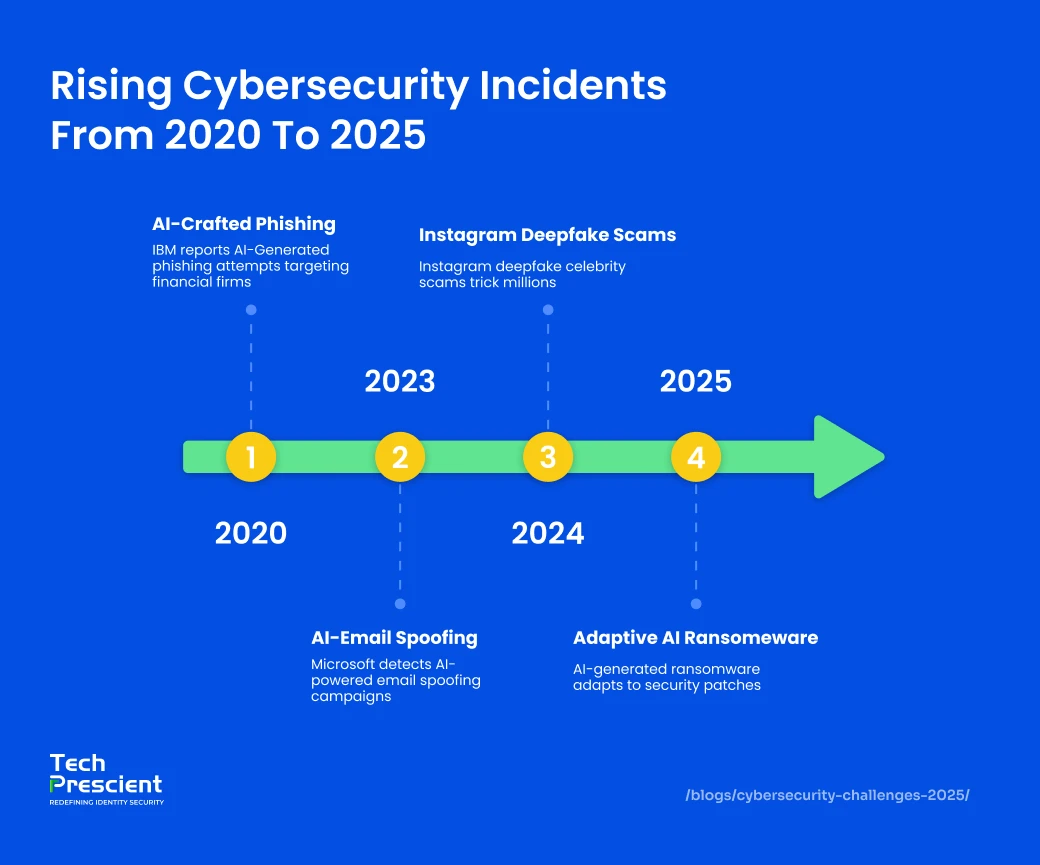
Top Emerging Cybersecurity Threats in 2026
The most dangerous cybersecurity threats in 2026 combine automation, scale, and stealth. AI-powered attacks, ransomware-as-a-service, supply chain compromise, and zero-day exploits are redefining risk exposure.
AI-Powered Attacks
AI-driven attacks leverage artificial intelligence technologies to increase the risk of cyber threats. They offer targeting, evasion, and automation potential. Such advanced attacks rely on machine learning to evaluate defense patterns, tailor scams to users' needs, and react in real time to security events.
AI has been used in defense in the security industry for a long time; however, 2026 marks an inflection point where offensive AI has fundamentally altered the threat landscape. The MIT Technology Review's The State of AI 2024 report includes the realization that AI-powered attacks (i.e., offensive AI) have increased 300% since 2023, and in particular, there are three significant types of threats:
- Context-aware phishing: While phishing in the past leveraged volume, the new AI-led phishing is based on precision. Language models can even 'understand' the behaviors and generate highly convincing messages related to real events of the organization and can match the typical writing of known associated individuals and know when to send it for the greatest impact.
- Voice and video deepfakes: Advances in generative AI enable realistic voice synthesis and video manipulation with limited source material. Attackers can impersonate executives or trusted individuals in real-time communications to authorize fund transfers, modify access permissions, or bypass verification procedures.
- Deepfakes also introduce risk to biometric authentication systems if identity verification relies solely on facial or voice recognition without layered validation controls.
- Autonomous malware: Self-adapting malware learns how a defense will respond to it and adapts the attack strategy in real time. In other words, unlike traditional malware that has an "attack signature", the AI threat can identify flaws that it can exploit, and then alter attack characteristics to defeat detection/evasion. Ultimately, this creates an arms race where attackers continually evolve their code faster than the defender can respond.
Tech Prescient's Identity Confluence helps address these challenges through its behavioral analytics capabilities that establish baseline access patterns for users. The platform can detect anomalous access requests that might indicate AI impersonation, providing an additional security layer beyond traditional authentication.
Reality Check
Attackers don’t break in; they log in. Credential theft and AI-driven impersonation now outperform traditional malware in success rates.
Ransomware & RaaS
Ransomware is malicious software designed to encrypt systems or restrict access to data until a payment is made. Attackers typically demand payment in cryptocurrency to reduce traceability, though payment does not guarantee data restoration or prevent subsequent exposure.
Ransomware campaigns can propagate laterally across networks, disrupting multiple systems within an organization. A notable example is the WannaCry ransomware attack, which significantly disrupted the National Health Service in 2017 by exploiting unpatched vulnerabilities at scale.
The operational model has evolved into Ransomware-as-a-Service (RaaS), in which developers create and maintain ransomware toolkits that affiliates deploy in exchange for a revenue share. This specialization reduces technical barriers to entry while increasing attack frequency and coordination.
Despite defensive advancements, ransomware remains one of the most financially damaging cyber threats. According to the Coveware Q1 2024 Ransomware Report, the average ransom payment reached $740,144, with total recovery costs often exceeding multiples of that amount when factoring in downtime, remediation, legal response, and reputational impact.
The shift in ransomware operations reveals three alarming trends:
- Threat service-based models: Ransomware-as-a-service (RaaS) platforms now offer victims negotiation teams, payment processing, and general technical assistance. This trend toward professionalizing ransomware groups has lowered the bar for those who do not have technical expertise while increasing the sophistication of the attacks.
- Multi-stage extortion: Attacks have progressed past encryption for ransom purposes to threaten additional attacks from data theft before encrypting data, threatened public release of sensitive information such as healthcare information, and a distributed denial-of-service attack as leverage.
- Critical infrastructure targeting threats: Ransomware groups are increasingly targeting health, energy, and transportation services.
Supply Chain Attacks
Supply chain attacks exploit trusted third-party relationships to gain indirect access to target environments. Rather than attacking hardened systems directly, threat actors compromise vendors, software providers, hardware manufacturers, or managed service partners that maintain legitimate integration or access.
This strategy bypasses perimeter defenses by leveraging established trust. A widely cited example is the SolarWinds supply chain attack, in which malicious code was inserted into a legitimate software update. The compromised update was distributed to thousands of organizations, enabling attackers to access customer environments through trusted channels.
Supply chain attacks are particularly disruptive because they undermine implicit trust relationships. Once embedded within a trusted workflow, adversaries can persist undetected, escalate privileges, and move laterally across interconnected systems. Current supply chain threat patterns typically fall into three categories:
- Software supply chain compromise: attacking legitimate software updates or legitimate software development pipelines by injecting malicious code.
- Vendor remote access exploitation: launching an attack through either privileged connections maintained by service providers or contractor access.
- Open-source poisoning: infiltration of open source vulnerabilities into open source components, which eventually become integrated into a commercial software product.
Zero-Day Exploits
A zero-day attack is an attack that exploits a security vulnerability that developers do not even know exists. They have zero days to develop a defense against it. Zero-day vulnerabilities can occur in software or hardware and often go undetected until a researcher discovers them or the attackers actively exploit them. We call it a zero-day attack because the organization had zero days of warning before the attack took place.
The attack lifecycle typically follows four distinct stages:
- Discovery: Attackers discover a previously unknown security vulnerability in commonly used software or hardware, and there is no patch for the vulnerability.
- Weaponization: The attackers create specific code (the exploit) that is designed to exploit this vulnerability.
- Deployment: The attackers execute their attack against the target systems before defenders know the vulnerability exists and bypass traditional security tools that use known threat signatures.
- Exploitation window: A dangerous time period exists between the attack and the time the vendors discover, create, and publish patches, creating a period of time where all users are vulnerable.
The risk of zero-days has been heightened because:
- Financial motivations: Black-market brokers pay millions for high-impact zero-days, which influences researchers to sell findings in the market instead of responsibly disclosing them.
- Prolonged exposure: Although patches are released, organizations take weeks to deploy patches, creating lengthy periods of vulnerability.
- Utilization by nation states: State-sponsored threat actors leverage additional zero-days for advanced directedness of attacks against high-value targets.
These attacks are especially risky because they escape traditional detection, as security controls are focused on protecting against recognized threats, as opposed to unencountered attacks.
| Sr No | Threat | Primary Risk | Identity Exposure | Mitigation Strategy |
|---|---|---|---|---|
| 1 | AI-Powered Attacks | Impersonation & automation | Account takeover | Behavioral analytics |
| 2 | Ransomware | Encryption & extortion | Privilege misuse | Least privilege enforcement |
| 3 | Supply Chain | Vendor compromise | Third-party access | Vendor access governance |
| 4 | Zero-Day | Unknown vulnerability | Lateral movement | Access segmentation |
Are You Prepared for the 2026 Threat Landscape?
Discover how leading organizations are addressing AI attacks, ransomware, and identity-driven risk.
Cybersecurity Challenges in the TMEGS Industry (2026 Focus)
Organizations operating across Technology, Media, Engineering, Government, and Services (TMEGS) face sector-specific cybersecurity risks driven by intellectual property concentration, critical infrastructure exposure, regulatory oversight, and complex third-party ecosystems.
These sectors operate interconnected digital and operational environments where identity boundaries often extend beyond the organization itself.
Key TMEGS-Specific Risks
Engineering Intellectual Property Theft
Engineering organizations manage high-value design data, proprietary models, and infrastructure schematics. Insider misuse, credential compromise, or supplier breaches can expose sensitive intellectual property with long-term competitive and national security implications.
Operational Technology (OT) and ICS Exposure
Engineering and infrastructure-heavy environments rely on Operational Technology (OT) and Industrial Control Systems (ICS) that were not originally designed with modern identity controls. Convergence between IT and OT environments increases attack surface and lateral movement risk.
Media Platform Account Takeovers and Data Leakage
Media and digital service platforms maintain large user bases and high-visibility accounts. Credential compromise, API abuse, or privileged access mismanagement can lead to account hijacking, content manipulation, and data exposure.
Government Regulatory Pressure and Nation-State Targeting
Government entities and contractors operate under strict compliance mandates while remaining persistent targets of state-aligned threat actors. Identity systems are often the primary entry point for espionage and privilege escalation.
Service Provider Third-Party Access Risk
Managed service providers and professional services firms maintain persistent access to client environments. Without strict identity segmentation and continuous validation, a single compromised vendor credential can introduce systemic exposure across multiple organizations.
Human & Operational Challenges
Human and operational weaknesses remain responsible for the majority of breaches. Skills shortages, human error, and insider misuse amplify technological vulnerabilities.
Skills Gap
The cybersecurity skills gap reflects a persistent imbalance between demand for specialized security expertise and the available workforce. Organizations increasingly invest in advanced security technologies, yet lack the internal capability to configure, manage, and optimize those controls effectively.
This gap has reached crisis levels in 2026, with the (ISC)² Cybersecurity Workforce Study reporting 3.7 million unfilled cybersecurity positions globally. This shortage creates several critical vulnerabilities:
- Alert fatigue: Security teams face alert fatigue due to the sheer volume of potential indicators of threats, resulting in potential blind spots, because the team cannot investigate all alerts.
- Specialized skill gaps: The skill gaps are especially acute in the areas of cloud security, identity governance, and security architecture.
- Retention issues: Security teams experience high rates of turnover, which leads to the understaffing of critical functions.

Pro Tip
Audit access, not just infrastructure. Most breaches start with identity misuse; quarterly access reviews help catch privilege creep early.
Human Error
Human error in cybersecurity refers to actions or omissions that introduce vulnerabilities or directly contribute to incidents. These may include responding to social engineering attempts, mishandling credentials, misconfiguring systems, or bypassing established security controls.
According to Verizon's Data Breach Investigations Report, 82% of breaches involve the "human element" in some form. This vulnerability persists for several reasons:
- Social engineering progression: Phishing moved from obvious spam to targeted efforts that contextualize breaches.
- Credential complication: Even with security awareness training, writing down passwords continues to cause issues, as do using and reusing credentials.
- Configuration complexity: Nowadays, systems require configurations to be much more complex, and misconfiguration is the cause of most cloud security incidents.
Insider Threats
Insider threats are risks to security that still come from someone who has authorized access to an organization’s systems or data. Insider threats generally can fit into one of three categories:
- Negligent insiders: Employees or contractors who inadvertently create security vulnerabilities due to negligence, lack of training, or disregard for policy. A negligent insider may share login credentials, click on links in phishing emails, improperly configure sensitive systems, or transfer sensitive data to unsecured personal devices. While not malicious, negligent insiders can create significant exposure to security forums.
- Malicious insiders: Employees who purposely misuse their authorized access to steal intellectual property, sabotage systems, or disclose sensitive information. A malicious insider exploits their authorized access, as well as their organizational knowledge, to perpetrate attacks that are difficult to detect, as the attacks often occur in the normal course of work.
- Credential theft victim: Occurrences where an external actor gains access to a legitimate user's credentials and poses as the impacted user. Credential theft victims, otherwise known as pseudo-insiders, are particularly dangerous because they have malicious intent from outside the organization, but combine it with the privileges of an established user inside the organization. The compromised insider often allows for lateral movement through networks to evade detection.
Identity Confluence helps detect and mitigate insider threats through its Identity Analytics & Risk Insights component, which uses login pattern analysis to establish baseline activities for each user and flag anomalous behaviors. The platform also enforces separation of duties to prevent single-user control of critical processes, limiting the damage potential from any individual insider.
Technological Vulnerabilities
Modern infrastructure introduces systemic vulnerabilities across IoT, cloud, and emerging technologies like quantum computing. Complexity is the new attack vector.
IoT & Endpoint Security
IoT devices (smart cameras, sensors, industrial controls) typically lack the robust security features found in traditional computing assets. Unlike corporate laptops or servers with regular updates and monitoring, these connected devices often run with basic security, creating significant vulnerabilities across networks.
This security gap creates three major challenges:
- Weak device protection: Many IoT devices ship with default passwords, unencrypted communications, and minimal security testing. Attackers exploit these weaknesses to access sensitive systems and data. For example, hackers can target vulnerabilities in building automation systems to manipulate temperature controls and gain deeper network access.
- Update limitations: Unlike standard computers, many IoT devices run proprietary operating systems that cannot be easily patched when vulnerabilities are discovered. Some devices lack any update mechanism at all, leaving security flaws permanently exposed.
- Extended attack surface: Remote work has expanded corporate networks to include home environments where consumer-grade IoT devices (smart speakers, home automation) share networks with corporate assets, creating countless new entry points with minimal security oversight.
Cloud Misconfigurations
Cloud misconfigurations are security vulnerabilities resulting from improperly set up cloud resources, often leading to data exposure or system compromise. These errors occur in various forms including overly permissive access controls, disabled encryption, and inadequate monitoring settings.
This persistent vulnerability stems from several factors:
- Multi-cloud complexity: Organizations typically use multiple public cloud providers. Each environment has different security models and interfaces, creating natural security gaps as teams work across platforms.
- Excessive permissions: Most cloud identities use only a small fraction of their assigned permissions, indicating widespread violation of least-privilege principles.
- Visibility challenges: Even security-focused organizations struggle to maintain visibility across hybrid infrastructures.
Quantum Computing (future risk)
Quantum computing employs the principles discovered in quantum physics to address complex problems at a velocity that is impossible for conventional computers to match. While conventional computers process information in bits (0's and 1's), quantum computers use quantum bits, or "qubits", which represent data that can exist in multiple states simultaneously, allowing certain calculations to be performed exponentially quicker than with traditional processors.
This new technology will usher in advances in medicine, materials science, and artificial intelligence, but will also provide significant new security issues. The security of the modern internet is provided by the use of encryption that a conventional computer would take thousands of years to break. A quantum computer would be able to solve the same problems in minutes or mere hours.
Though it may take years to achieve the realization of fully capable quantum computers, there are three immediate security concerns that organizations must consider:
- "Harvest now, decrypt later" attacks: Adversaries are collecting sensitive data that has been encrypted now and intend to decrypt it later when the use of quantum computing is viable. Data that has long-term value (trade secrets, personal information, and national security material) will still have long-term vulnerability regardless of current encryption standards.
- Susceptibility of cryptography: For digital security to exist, there must be some problem in mathematics that the cyber adversary could not use a conventional computer to solve. Theoretically, quantum algorithms, such as Shor's algorithm, could resolve the mathematical problems that support most digital security, including secure transactions and secure communications.
- Slow transition: The process of developing and implementing quantum-resistant encryption will take a considerable amount of time and money. With most organizations not planning to start the transition, the security landscape faces a perilous implementation gap whenever quantum computing appears.
Organizational & Compliance Pressures
Regulatory expansion and shadow IT growth create governance challenges that traditional security models struggle to address.
Regulatory Challenges
Regulatory cyber issues refer to the difficult and occasionally conflicting requirements faced by organizations when complying with laws, regulations, and operational standards related to data protection, privacy, and security across jurisdictions. Similarly, the regulatory environment is changing rapidly, resulting in a complicated compliance framework. By 2026 end, more than 150 countries will have passed data protection regulations based on the European Union General Data Protection Regulation (GDPR).
A few important regulatory trends create challenges for security teams:
Jurisdictional fragmentation
In the United States, the absence of federal privacy legislation has led to a patchwork of state laws.
Additional reporting requirements
Publicly held companies face shorter time frames for incident reporting and greater requirements for disclosures.
Increased enforcement
Regulatory authorities have increased both the frequency and severity of enforcement action.
Shadow IT
Shadow IT refers to technology resources used within an organization without the knowledge or approval of the central IT department. This includes unauthorized cloud services, applications, devices, or software that employees use to enhance productivity or circumvent perceived IT limitations. While often implemented with good intentions, these unsanctioned technologies bypass official security measures and create significant vulnerabilities.
Over the last decade, the ease of use of cloud services and Software-as-a-Service (SaaS) applications has transformed this into a major issue for organizations and creating three main security threats:
Visibility
Security teams can't protect what they don't know exists. IT departments often find that they only know a small fraction of cloud services that are being used within their organizations, while almost all of the cloud services go unmonitored and unprotected.
Data protection
Employees often take sensitive company information and use unauthorized services that lack the right level of protection. This could possibly expose regulated personally identifiable data or intellectual property to a data breach.
AI exposure
The use of generative AI tools could be considered the latest frontier of shadow IT. Employees may paste sensitive company information into AI services without thinking about privacy and terms when using the service that enables them to use, retain, and to learn from all submitted data.
How to Overcome Cybersecurity Challenges
Overcoming cybersecurity challenges in 2026 requires identity-centric security, continuous monitoring, automation, and proactive governance.
Adopt Zero Trust Architecture
Zero Trust Architecture eliminates implicit trust within an organization's network and requires continuous verification of every user, device, and application attempting to access resources, regardless of location. This approach assumes breach as a default state and verifies each access request individually rather than trusting users based on network location.
Effective implementation includes:
Identity-centric security
Replace network-based trust with identity-based verification.
Micro-segmentation
Divide networks into secure zones with separate access requirements to contain lateral movement if breaches occur.
Continuous validation
Implement systems that verify trust continuously rather than at login only, adapting access rights based on risk factors.
Continuous Employee Awareness Training
Continuous awareness training transforms security education from annual compliance exercises to an ongoing process that builds security knowledge through regular, relevant learning opportunities integrated into employees' workflows. This approach recognizes that security awareness must be reinforced continuously to address evolving threats.
Effective programs incorporate:
Microlearning modules
Short, focused training delivered at the point of risk rather than lengthy annual sessions.
Personalized content
Training customized to each employee's role, access privileges, and past security behavior.
Simulated attacks
Controlled tests that mimic real threats targeting specific organizational vulnerabilities, providing practical learning experiences.
Invest in AI-Driven Defense Tools
AI-driven defense tools leverage artificial intelligence and machine learning to detect threats, automate responses, and enhance security operations beyond what human analysts could accomplish alone. These tools analyze patterns across vast datasets to identify anomalies, predict potential attacks, and accelerate incident response.
AI security tools provide advantages in:
Anomaly detection
Identifying unusual patterns across massive datasets that would be impossible for human analysts to process manually.
Automated response
Taking immediate action against known threat patterns, reducing the time between detection and containment.
Predictive analysis
Forecasting potential vulnerabilities before exploitation by analyzing threat intelligence and system characteristics.
Regular Patching & Vulnerability Scanning
Vulnerability management encompasses the cyclical practice of identifying, classifying, remediating, and mitigating security weaknesses in systems and software. This process includes discovering vulnerabilities through scanning, prioritizing them based on risk, applying patches or mitigations, and verifying remediation effectiveness.
A comprehensive approach includes:
Automated discovery and scanning
Continuous monitoring for vulnerabilities across all environments.
Risk-based prioritization
Focusing remediation efforts on vulnerabilities with the highest business impact.
Defined patching SLAs
Establishing time frames for remediation based on severity.
Strengthen Supply Chain Security Assessments
Supply chain security assessments systematically evaluate the security postures of vendors, partners, and service providers to identify and remediate risks before they impact the organization. These assessments examine third-party security practices, access requirements, and incident response capabilities.
Effective third-party security governance includes:
Pre-access security evaluation
Comprehensive assessment before granting system access.
Continuous monitoring
Ongoing validation of vendor security posture.
Limited access enforcement
Ensuring vendors can access only essential systems and data.
Final Thoughts
The cybersecurity challenges anticipated in 2026 are numerous and rapidly changing. Managing these challenges will require a thoughtful approach across technology, people, and process change. Although sophistication in threats will continue to rise, organizations deploying layered defenses with identity at the core will significantly limit their risk.
Identity Governance and Administration (IGA) is an integral element of security because it is ultimately the question of who has access to what and whether that access is appropriate. As traditional perimeters diminish, identity has become the only control point for all systems on-premise, in the cloud, and third-party services.
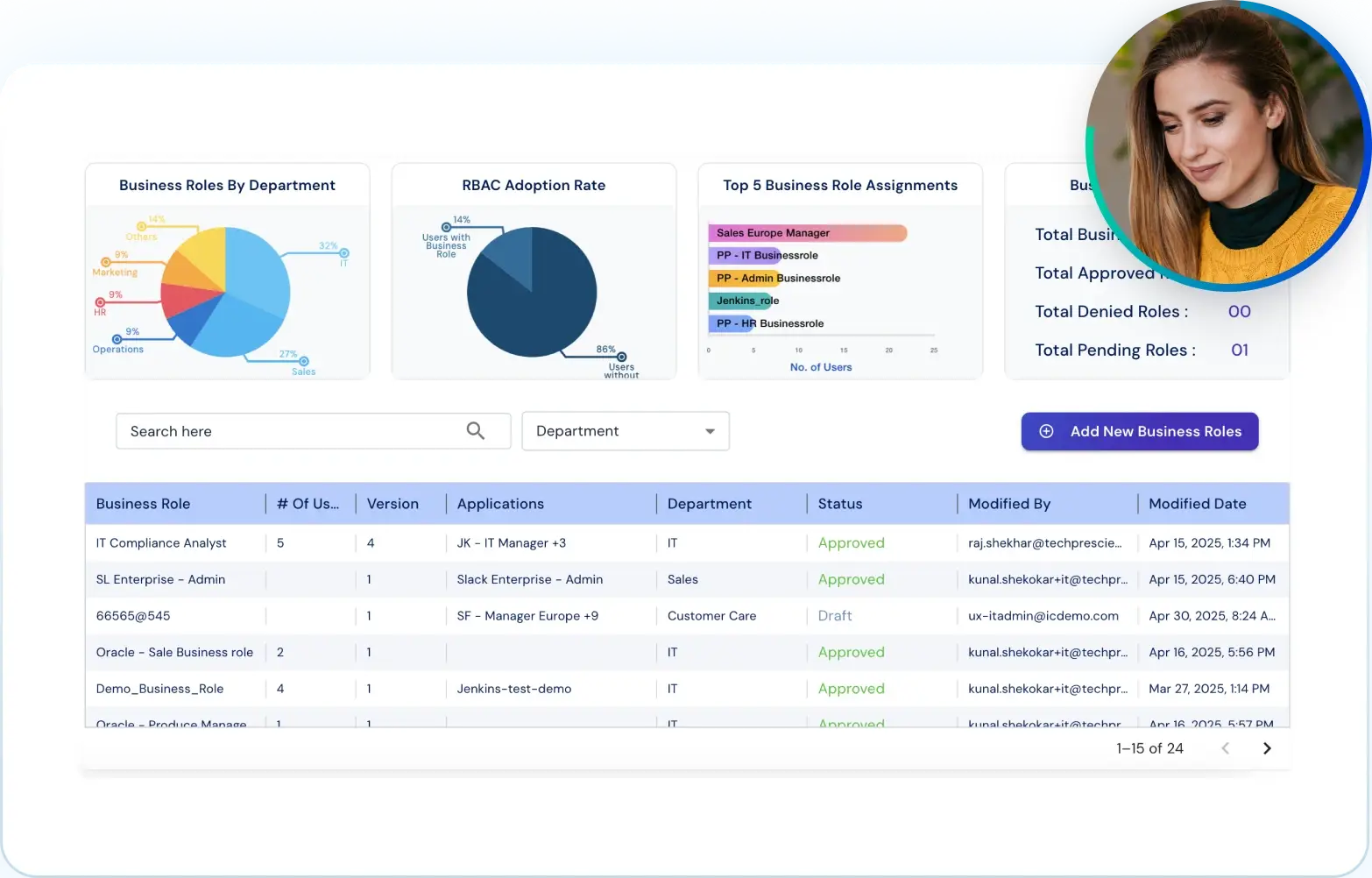
Tech Prescient's Identity Confluence product consolidates identity governance at the same time as automating the enforcement of access policies. Through deploying automated life cycle management, risk-based analytics, and continuous policy enforcement, organizations can shift identity from an often burdensome administrative task to a strategic security-related opportunity.
The future of cybersecurity is not about building taller walls but about knowing who is at the gate and what they should be able to access once they get through the gate.
Are You Prepared for the 2026 Threat Landscape?
Discover how leading organizations are addressing AI attacks, ransomware, and identity-driven risk.
FAQs
The main cybersecurity challenges in 2026 include AI-powered attacks, ransomware, supply chain vulnerabilities, insider threats, and regulatory pressure. These challenges are interconnected, as attackers leverage AI to create more sophisticated threats while organizations struggle with resource constraints and expanding regulatory requirements.
Ransomware remains the most financially damaging cyber threat. Its evolution into a service model has lowered barriers to entry for criminals, while multi-stage extortion tactics have increased potential damages. The average incident now costs organizations millions in direct payments, recovery expenses, and business disruption.
AI attacks, ransomware, IoT vulnerabilities, insider threats, and zero-day exploits. These threats have evolved to bypass traditional security controls, exploiting the expanded attack surface created by digital transformation and remote work. Identity-based security has become essential for detecting and mitigating these advanced threats.
By implementing Zero Trust, automating defenses, training staff, and enforcing compliance monitoring. Organizations should focus on identity governance as the foundation of their security strategy, ensuring that all access is appropriate, regularly reviewed, and automatically adjusted as roles change.
Without skilled staff, organizations can't detect, prevent, or respond to sophisticated threats. The talent shortage forces security teams to focus on immediate threats rather than strategic improvements, creating a reactive security posture. Automation and managed services have become essential for augmenting internal capabilities in this constrained talent environment.


GET A PERSONALIZED DEMO
See Identity Confluence in Action
“One platform to govern identities, automate access decisions, and prove compliance; across every app, user, and system in your environment.”



Murli Ramsunder
Senior Architect, Vonage