




On this page
See Tech Prescient in Action
Automate access, reduce risk, and stay audit-ready
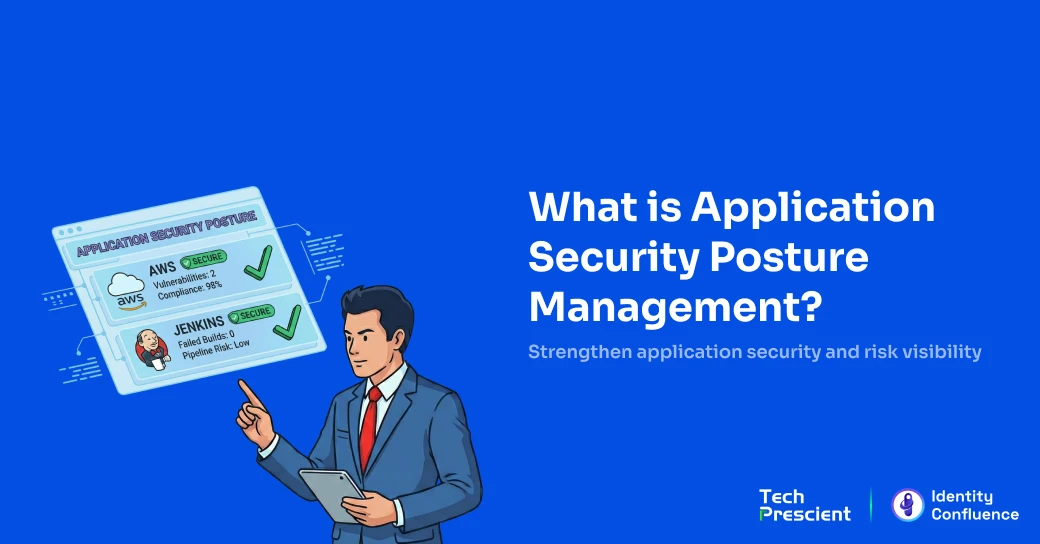
Application Security Posture Management (ASPM) is a security framework that centralizes and prioritizes application vulnerabilities across the entire software development lifecycle (SDLC). It integrates tools like SAST, DAST, SCA, and CI/CD systems to provide risk-based visibility and automated remediation.
As applications become more complex, attack surfaces expand and compliance obligations increase. Security teams are frequently burdened by fragmented tooling and high volumes of unprioritized findings. ASPM addresses this by aggregating data from multiple security technologies into a single, unified view, enabling teams to focus on the vulnerabilities that present the highest business risk.
ASPM functions as a centralized source of truth for application security by consolidating results from disparate tools into a unified dashboard. Findings are normalized, deduplicated, and correlated to reduce noise and improve remediation accuracy. Risks are prioritized based on contextual impact, including exploitability, exposure, and business criticality, rather than severity alone. Automated remediation workflows further reduce manual effort and strengthen collaboration between security and engineering teams.
According to Gartner’s Innovation Insight research, approximately 29% of organizations in regulated industries currently using application security testing have adopted ASPM, with adoption projected to increase significantly. This growth reflects rising architectural complexity, regulatory pressure, and the need for scalable application security operations.
This article examines ASPM’s definition, its significance in 2026, core capabilities, comparison with adjacent security categories, practical use cases, and its continued evolution within cloud-native environments.
Key Takeaways:
- ASPM unifies application security tools, risks, and insights into a single view.
- Rising cloud complexity and compliance needs make ASPM critical in 2026.
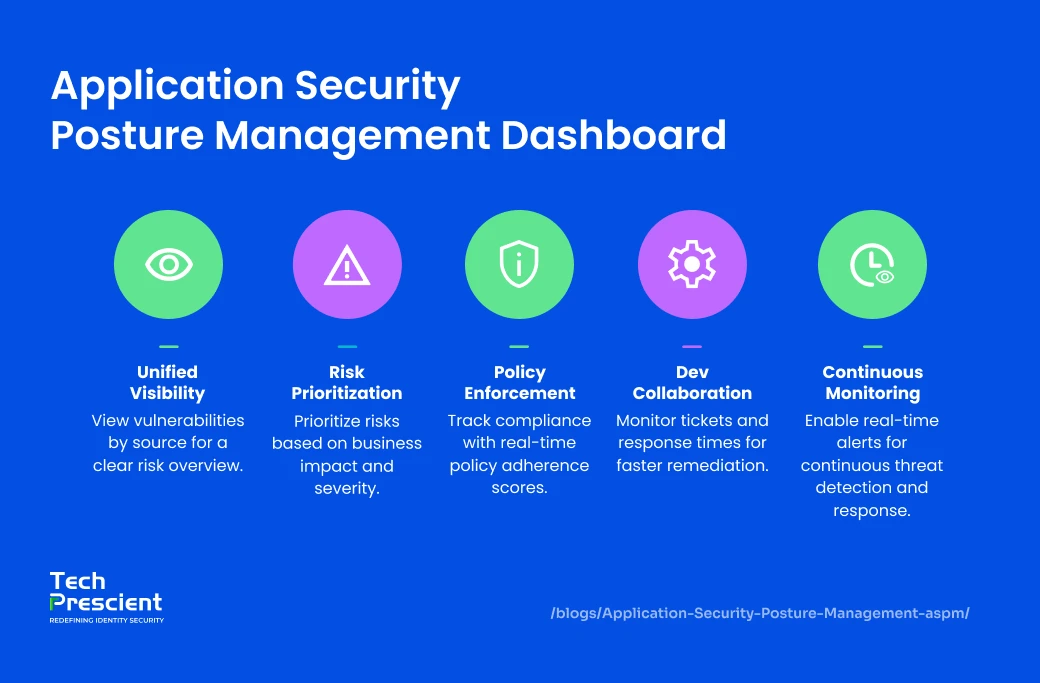
- Core capabilities include visibility, risk prioritization, policy enforcement, and collaboration.
- ASPM complements other security tools like [CSPM](/blogs/cloud-security-posture-management/), DSPM, and ASOC.
- It delivers measurable business impact, real-world use cases, and future-ready security with AI and cloud.
ASPM Meaning Explained
ASPM meaning in cybersecurity refers to Application Security Posture Management, a centralized platform that aggregates, correlates, and prioritizes vulnerabilities across code, APIs, pipelines, and cloud environments.
While ASPM can mean different things in other domains like Active State Power Management in computing or Airport Surface Performance Metric in aviation, here it specifically refers to cybersecurity ASPM, which focuses on securing applications, code, and infrastructure across hybrid and cloud environments.
In essence, Application Security Posture Management acts as a governance and command platform that integrates with scanning, testing, and monitoring tools to deliver a holistic view of application risk. It consolidates findings from tools like Static Application Security Testing (SAST), Dynamic Application Security Testing (DAST), Software Composition Analysis (SCA), and Infrastructure as Code scanners (IaC), and helps security teams prioritize vulnerabilities based on exploitability and business impact.
Key functions of ASPM include:
- Continuously assessing and monitoring application security across development and cloud environments.
- Integrating with AppSec tools, CI/CD pipelines, and ticketing systems to provide unified visibility.
- Automating detection, correlation, and prioritization of vulnerabilities based on contextual risk.
- Centralizing policy enforcement to maintain consistent security standards.
- Providing risk-based scoring and contextual insights for faster, more accurate decision-making.
- Tracking architecture and dependency drift to prevent unnoticed vulnerabilities.
- Enabling collaboration between development and security teams with automated remediation workflows.
Advanced ASPM solutions also leverage AI and machine learning to detect emerging threats, predict potential exploits, and recommend proactive measures. By combining automation, integration, and intelligence, ASPM unifies AppSec and infrastructure vulnerability management to ensure security remains continuous, contextual, and scalable across the entire organization.
Why is ASPM Important in 2026?
ASPM is critical in 2026 because modern applications are distributed across microservices, APIs, containers, and hybrid cloud environments. Traditional security tools operate in silos, limiting unified risk visibility and complicating compliance reporting without a centralized orchestration layer.
ASPM emerged in response to structural shifts in how software is built and delivered:
- Architectural complexity: Cloud-native applications span microservices, APIs, containers, and infrastructure as code.
- Fragmented tooling: SAST, DAST, SCA, container scanning, and CI/CD integrations generate disconnected findings.
- Accelerated release cycles: Deployment frequency has shifted from monthly to weekly, daily, or continuous delivery.
- Regulatory pressure: Consolidated reporting, audit readiness, and policy enforcement are now operational requirements.
Traditional application security testing models were designed for monolithic systems and slower release cadences. In modern environments, multiple testing methodologies are required, but without correlation and normalization, they produce duplicated findings, inconsistent prioritization, and inefficient remediation workflows.
According to Gartner, by 2026, nearly 40% of organizations developing proprietary applications will adopt ASPM solutions to streamline AppSec operations and strengthen security posture. This growth is driven by increasing compliance requirements, expanding supply chain risks, and the need for better visibility across hybrid environments.
ASPM provides a structured and scalable way to handle these growing complexities, ensuring that security remains embedded throughout both development and operations. By streamlining and integrating security practices, ASPM addresses the challenges of secure software delivery while driving value across five key areas:
- Visibility: Create a holistic perspective of your product risk. Identify all repositories and assets to achieve end-to-end visibility throughout your ecosystem with extensive integrations across code repositories, infrastructure, cloud, and container scanners.
- Risk-Based Prioritization: Correlate findings across tools, enrich them with business context and threat intelligence, and focus on vulnerabilities that pose real-world risk.
- Remediation Efficiency: Automate ticketing, triage, and escalation to help developers resolve issues faster while reducing manual effort.
- Automation: Orchestrate DevSecOps workflows at scale with automated scans, guardrails, and policy enforcement throughout CI/CD pipelines.
- Data-Driven Security: Use analytics and metrics like MTTR and SLA tracking to measure progress, optimize team performance, and continuously mature the organization’s security posture.
Ultimately, ASPM enables enterprises to manage risk proactively, accelerate compliance and reporting, and empower developers to ship secure code without friction.
Core ASPM Capabilities
Application Security Posture Management (ASPM) consolidates multiple application security functions into a single, unified system that bridges the gap between tools, teams, and processes. It delivers complete visibility, prioritization, automation, and collaboration across the software development lifecycle, helping organizations maintain a strong and proactive security posture.
Unified Visibility
ASPM provides a centralized view of vulnerabilities and security posture across all AppSec tools, including SAST, DAST, SCA, and IaC scanners. By aggregating findings from multiple sources, ASPM eliminates silos and creates a single pane of glass for developers and security teams.
It automatically builds and maintains an up-to-date inventory of all applications, their dependencies, APIs, and services, giving teams a 360-degree view of their ecosystem. This helps uncover misconfigurations, vulnerable components, and exposure points across code, containers, and cloud environments. With contextual insights and metadata, ASPM connects technical risks to business impact, helping teams understand what matters most and why.

Pro Tip 1: Start with Risk Correlation, Not Tool Integration
Before integrating every scanner, focus on correlating findings by exploitability and business impact. This ensures ASPM delivers actionable insights instead of centralized noise.
Risk-Based Prioritization
An effective ASPM solution should deliver a comprehensive view of the organization’s overall risk posture across its entire software landscape. It must offer detailed insights into the location of vulnerable components and applications, the progress of issue remediation, and any existing policy or compliance breaches. In essence, security leaders should be able to use ASPM to audit applications, assess software-related organizational risk, and track key KPIs that reflect the performance and maturity of their AppSec program.
Policy Enforcement
ASPM enforces security and compliance policies consistently across the software delivery lifecycle. It aligns organizational guardrails with frameworks like OWASP, PCI DSS, and HIPAA, ensuring every release meets compliance and audit requirements.
Through policy automation, ASPM helps developers build secure applications by design. Security teams define policies once, and ASPM ensures adherence across development, testing, and production environments. It also simplifies compliance reporting by maintaining auditable trails and real-time dashboards tailored to executive, security, and developer needs.
Developer Collaboration
ASPM enhances DevSecOps collaboration by integrating directly into existing developer workflows and tools such as CI/CD pipelines, ticketing systems, and communication platforms. Developers receive actionable insights and prioritized issues directly within their tools, minimizing context switching.
It automates remediation workflows such as ticket creation, escalation, and notifications through integrations with systems like Jira or Slack. By embedding security feedback loops early in development, ASPM promotes shift-left security, allowing vulnerabilities to be identified and fixed when they are most cost-effective to address. Moreover, ASPM supports developer enablement through targeted training and in-tool guidance, ensuring teams not only fix issues but also understand the underlying security principles behind them.
Continuous Monitoring & Alerts
ASPM continuously monitors applications and their environments to detect emerging vulnerabilities and misconfigurations in real time. It integrates with DevSecOps pipelines to ensure ongoing validation of application integrity as new code, dependencies, or infrastructure changes are introduced.
Advanced platforms provide automated alerting and reporting capabilities, surfacing high-priority issues based on defined risk thresholds. They enable organizations to measure metrics like Mean Time to Remediate (MTTR) and track performance against SLAs, giving leaders data-driven visibility into AppSec progress and maturity.
By combining automation, visibility, and intelligence, ASPM ensures that application security is continuous, proactive, and aligned with the speed of modern software delivery.
ASPM Platform Features Explained
Modern ASPM platforms extend beyond standalone vulnerability scanning. They centralize application security data, automate remediation workflows, and apply contextual risk analysis across development and runtime environments.
Core ASPM platform capabilities typically include:
- Centralized vulnerability dashboard: A unified view that consolidates findings across SAST, DAST, SCA, container, API, and infrastructure scanning tools.
- Risk-based scoring engine: Context-aware prioritization that incorporates exploitability, asset exposure, business criticality, and threat intelligence.
- CI/CD pipeline integration: Native integration within build and deployment workflows to enforce policies and detect issues early in the development lifecycle.
- API and software supply chain visibility: Discovery and monitoring of APIs, third-party components, and open-source dependencies across environments.
- Policy automation and guardrails: Standardized security controls embedded within pipelines to enforce compliance requirements consistently.
- Automated ticketing and workflow integration: Direct synchronization with systems such as Jira and ServiceNow to streamline triage and remediation tracking.
- Executive and compliance reporting dashboards: Aggregated reporting designed to support audit readiness and regulatory oversight.
- SBOM generation and dependency mapping: Automated creation of Software Bills of Materials (SBOMs) and traceability across application components.
When evaluating ASPM platforms, enterprises should assess integration depth across existing toolchains, automation maturity, scalability across distributed environments, and the effectiveness of contextual risk correlation, particularly where AI-assisted analysis is applied.
ASPM vs Other Security Tools
ASPM does not replace other security platforms. It complements them. Each tool, from Cloud Security Posture Management (CSPM) to Data Security Posture Management (DSPM), Application Security Orchestration and Correlation (ASOC), and Cloud-Native Application Protection Platform (CNAPP), addresses a distinct layer of the modern security stack. ASPM acts as the unifying layer that bridges these tools by focusing on the application layer. It integrates insights across scanners and systems to provide end-to-end visibility and risk-based prioritization throughout the software development lifecycle.
ASPM vs CSPM
The distinction between ASPM and CSPM is architectural scope.
Cloud Security Posture Management (CSPM) focuses on securing cloud environments, including IaaS, PaaS, and SaaS configurations. CSPM solutions identify misconfigurations, policy violations, and compliance gaps across cloud infrastructure. Their visibility centers on the environment hosting applications, not the internal security posture of the applications themselves.
ASPM addresses the application layer. It correlates findings from code scanning, dependency analysis, container security, and CI/CD workflows to identify vulnerabilities introduced during development. While CSPM may detect insecure cloud configurations, it does not determine whether a deployed application contains vulnerable libraries or insecure code patterns.
In practice:
- CSPM: Secures cloud infrastructure and configuration.
- ASPM: Secures the application and its lifecycle across development and deployment.
The two are complementary. CSPM protects the environment; ASPM governs the software built within it.
ASPM vs ASOC
Both ASPM (Application Security Posture Management) and ASOC (Application Security Orchestration and Correlation) are designed to streamline application security, but their scope and focus differ.
ASOC focuses on optimizing the testing workflow. It aggregates results from various security tools such as SAST, DAST, and SCA into a unified dashboard, allowing security teams to orchestrate scans, correlate vulnerabilities, and prioritize remediation. In essence, ASOC acts as the coordination hub that synchronizes multiple AppSec tools and provides a consolidated view of detected issues.
ASPM, on the other hand, expands the horizon. It includes everything ASOC offers while adding a comprehensive, DevSecOps-oriented perspective. ASPM continuously evaluates the security posture of applications across the entire software lifecycle by tracking risks, ownership, and remediation progress. Rather than just reporting scan results, ASPM provides contextual insight into business risk and promotes a risk-based and visibility-driven approach to application security.
To put it simply:
- ASOC = Centralize and streamline your security testing process.
- ASPM = Extend beyond orchestration to manage and measure your overall application security posture.
ASPM represents the next generation of ASOC, moving from tool coordination to embedding security awareness and risk management into every stage of software development and deployment.
ASPM vs CNAPP
Cloud-Native Application Protection Platforms (CNAPP) focus primarily on runtime and cloud-native workload protection. CNAPP consolidates capabilities such as CSPM, CWPP, and CIEM to monitor containers, Kubernetes environments, serverless workloads, and cloud entitlements. Its emphasis is continuous monitoring and protection of deployed resources.
ASPM operates earlier in the lifecycle. It evaluates application risk across source code, open-source dependencies, containers, and infrastructure as code before and during deployment. By correlating development-stage findings with contextual business risk, ASPM supports early remediation and reduces the likelihood of vulnerabilities reaching production.
In practice:
- CNAPP: Protects cloud-native workloads and infrastructure at runtime.
- ASPM: Identifies and prioritizes application-layer risk across development and deployment.
These capabilities are complementary: one focuses on protecting active environments, the other on managing application risk throughout its lifecycle.
ASPM vs DSPM
ASPM secures the software development lifecycle by identifying vulnerabilities, misconfigurations, and compliance gaps across applications and pipelines. Data Security Posture Management (DSPM) focuses on the data layer. It continuously discovers, classifies, and secures sensitive data such as PII, PHI, credentials, or intellectual property across cloud and on-premises environments.
Modern DSPM tools include both passive capabilities, such as continuous data discovery and exposure monitoring, and active capabilities, such as automated remediation and real-time policy enforcement. These tools maintain visibility and control even in complex environments, complementing ASPM’s role in securing the applications that handle that data.
Together, ASPM safeguards your software, while DSPM secures the data behind it.
Comparison Summary
| Sr No. | Tool | Primary Focus | Core Function | Stage of Protection | Example Capabilities |
|---|---|---|---|---|---|
| 1 | ASPM | ASPM focuses on the application layer and tracks risks across code and pipelines. | It aggregates scan results, prioritizes issues, and manages security posture. | ASPM protects applications across the SDLC. | It integrates SAST, DAST, and SCA tools, enforces policies, and drives risk-based remediation. |
| 2 | CSPM | CSPM focuses on cloud infrastructure and configurations. | It detects misconfigurations and compliance issues in cloud setups. | CSPM protects during cloud configuration and runtime. | It monitors compliance, scans resources, and alerts on insecure settings. |
| 3 | ASOC | ASOC focuses on orchestrating application security testing. | It coordinates scans, correlates results, and streamlines fixes. | ASOC protects during development and testing. | It consolidates tool outputs, automates scans, and generates remediation reports. |
| 4 | CNAPP | CNAPP focuses on securing cloud-native workloads in production. | It provides real-time monitoring and protection across the cloud. | CNAPP protects applications at runtime. | It detects container issues, enforces Kubernetes policies, secures serverless, and ensures compliance. |
| 5 | DSPM | DSPM focuses on discovering and protecting sensitive data. | It monitors exposure and enforces controls on critical data. | DSPM provides continuous protection across all environments. | It automates data discovery, classifies sensitive data, and remediates exposure risks. |
Common Pitfall to Avoid:
Treating ASPM as a replacement for existing AppSec tools limits its value. It works best as a unifying intelligence layer, not a standalone scanner.
Benefits of ASPM for Enterprises
ASPM strengthens enterprise security, compliance, and DevSecOps velocity by bringing unified visibility, context, and control across the application lifecycle. It helps organizations reduce alert fatigue, accelerate remediation workflows, and foster seamless collaboration between security and development teams, all while reinforcing compliance and application resilience.
Reduced Alert Fatigue and Smarter Prioritization
Traditional AppSec tools flood teams with disconnected alerts that lack actionable context. ASPM changes this by correlating findings across code, pipelines, and cloud environments such as SAST, DAST, IaC, dependency, and runtime insights into a single source of truth.
By evaluating vulnerabilities through risk factors such as reachability, exposure, data sensitivity, and attack path potential, ASPM ensures that teams focus only on what’s actually exploitable. This context-driven approach minimizes noise, reduces fatigue, and drives faster, more confident responses.
Faster Remediation and Workflow Automation
ASPM streamlines remediation by automatically mapping findings to the right repositories, pipelines, and owners, similar to Zendesk’s ownership model. Security issues reach the responsible teams instantly, eliminating confusion and delay.
Integrated with CI/CD systems and developer tools, ASPM enables “shift left” practices, surfacing issues early in the SDLC without disrupting development velocity. Automation of triage, prioritization, and policy enforcement allows teams to remediate vulnerabilities in real time and sustain continuous delivery of secure applications.
Enhanced Compliance and Data Protection
Compliance frameworks such as GDPR, HIPAA, PCI DSS, and CCPA demand continuous visibility into sensitive data and security posture. ASPM provides automated compliance checks, continuous monitoring, and detailed audit trails across applications.
By mapping application data flows, identifying PII, PHI, and PCI data stores, and verifying architectural controls, ASPM simplifies regulatory reporting and strengthens governance. It ensures that applications remain aligned with both internal policies and external compliance mandates.
Improved Collaboration Across Security and Dev Teams
ASPM bridges the long-standing gap between security and development by embedding contextual feedback directly into developer workflows. Developers gain real-time visibility into vulnerabilities with guidance for secure coding, while security teams maintain overarching control and traceability.
This shared visibility reduces rework, accelerates release cycles, and builds a stronger security culture where every contributor understands their role in maintaining application integrity.
Stronger Application Resilience and Business Continuity
By continuously monitoring architecture, configurations, and controls, ASPM helps organizations identify weaknesses before they escalate. It enforces standardized governance policies and validates application security posture over time, ensuring that resilience strengthens with every release.
Through proactive risk management, automated checks, and trend analysis, enterprises can safeguard against evolving cyberthreats and ensure uninterrupted user experiences.
Broader Business Impact and Executive Visibility
Beyond technical advantages, ASPM delivers measurable business outcomes. It provides executives with a holistic view of application risk posture, enabling data-driven decisions, effective resource allocation, and strategic planning.
Real-time dashboards and trend analytics transform security data into business insights, helping leaders demonstrate ROI, support compliance audits, and communicate clearly with boards and stakeholders. The result is improved brand reputation, customer trust, and long-term competitive advantage.
ASPM Tools & Vendors to Know
As the ASPM market evolves, several vendors are redefining how enterprises manage application security risk. Key evaluation factors include integration with existing DevSecOps tools, automation of vulnerability management, and scalability across hybrid environments.
Tech Prescient stands out as a forward-looking ASPM partner with strong capabilities in identity governance, data protection, and compliance automation. It's platforms like Identity Confluence that unify visibility, automate policy enforcement, and simplify audits for frameworks such as SOC 2, HIPAA, and ISO 27001. By combining intelligent automation with deep security insight, Tech Prescient helps enterprises strengthen application posture and accelerate secure software delivery.
Real-World ASPM Use Cases
ASPM delivers tangible value across industries by unifying visibility, automating compliance, and strengthening resilience from code to cloud. Its continuous monitoring and contextual risk analysis make it indispensable for modern enterprises navigating complex hybrid environments.
Finance
Financial institutions use ASPM to reduce risk through strong segregation of duties (SoD) controls and continuous compliance enforcement. By integrating with existing security tools, ASPM ensures visibility into application vulnerabilities, automates audit reporting, and safeguards sensitive financial data to meet frameworks like SOX and PCI DSS.
Healthcare
In healthcare, ASPM strengthens the protection of PHI and ensures HIPAA compliance by continuously monitoring applications and APIs for misconfigurations or data exposure. Automated compliance reporting and drift detection help maintain an accurate security baseline, minimizing downtime during audits or recovery.
SaaS & Cloud
For SaaS and cloud-native organizations, ASPM enhances API security and software supply chain visibility. It maintains a live SBOM, detects vulnerabilities across CI/CD pipelines, and tracks third-party dependencies in real time. This visibility helps teams prioritize exploitable risks, secure APIs, and ensure rapid, compliant deployments.
ASPM Case Studies & Measurable Outcomes
Organizations implementing ASPM commonly report measurable improvements in vulnerability management efficiency, remediation workflows, and compliance readiness. By consolidating fragmented security findings and applying contextual prioritization, ASPM reduces operational friction across security and engineering teams.
Reported outcomes include:
- 35–50% reduction in alert fatigue through deduplication and risk-based correlation of findings.
- Approximately 30% faster Mean Time to Remediate (MTTR) driven by workflow automation and clearer ownership tracking.
- Improved audit readiness for frameworks such as SOC 2 and HIPAA through consolidated reporting and policy enforcement.
- Reduced duplicate vulnerabilities across tools by normalizing and correlating scan outputs.
In regulated sectors such as finance and healthcare, ASPM adoption has been associated with more efficient audit cycles and improved visibility into application-layer risk. By centralizing evidence and standardizing security workflows, organizations reduce operational exposure while strengthening compliance posture.
These outcomes vary by environment maturity, integration depth, and process alignment. However, the consistent impact is improved visibility, prioritized remediation, and measurable operational efficiency across application security programs.
Future of ASPM
As organizations continue to modernize applications and expand across hybrid and cloud-native environments, ASPM is becoming an essential layer of cybersecurity. It unifies visibility, risk management, and compliance across the entire application lifecycle, helping security teams move from reactive defense to proactive posture management. In the future, ASPM will evolve into an intelligent system that not only monitors vulnerabilities but also predicts, prevents, and automates responses to threats across code, pipelines, and cloud.
The next generation of ASPM solutions will focus on:
- AI-driven automation for faster and context-aware risk prioritization
- Predictive analytics to anticipate and mitigate emerging threats
- Seamless integration with DevSecOps tools for continuous protection
- Continuous compliance through automated policy checks and reporting
Forward-thinking vendors will lead this transformation by innovating rapidly, delivering regular updates, and maintaining transparent product roadmaps. ASPM is no longer a niche tool. It is the cornerstone of modern cybersecurity and a critical enabler of long-term resilience and security maturity in 2025 and beyond.
Common ASPM Implementation Challenges
Although ASPM strengthens application security operations, implementation gaps can limit its effectiveness if not addressed systematically.
Common challenges include:
- Incomplete integration with DevOps pipelines: Limited CI/CD integration reduces visibility and weakens policy enforcement across build and deployment stages.
- Unclear ownership between security and development teams: Without defined accountability, remediation workflows slow, and findings remain unresolved.
- Over-automation without contextual prioritization: Automating workflows without risk correlation can increase noise rather than reduce it.
- Misalignment with compliance frameworks: Policies that are not mapped to regulatory requirements undermine reporting and audit readiness.
- Positioning ASPM as a replacement rather than a unifying layer: ASPM is designed to coordinate existing tools, not displace them.
Effective ASPM deployments require structured governance, defined ownership models, integration depth across toolchains, and ongoing policy refinement. Without these controls, the platform may centralize data but fail to improve risk outcomes.
When implemented with operational discipline, ASPM strengthens visibility, prioritization accuracy, and cross-team coordination across the application lifecycle.
Final Thoughts
Application Security Posture Management (ASPM) is quickly becoming a cornerstone of modern cybersecurity. In a world where applications span code, pipelines, APIs, and cloud environments, ASPM brings clarity by unifying risks, streamlining compliance, and prioritizing what truly matters. It transforms fragmented security efforts into a cohesive strategy that not only reduces vulnerabilities but also empowers teams to act faster and smarter.
As organizations embrace DevSecOps, AI-driven automation, and Zero Trust principles, ASPM is evolving into an adaptive and intelligence-driven system. Its role goes beyond preventing breaches as it enables secure innovation, accelerates development, and builds long-term resilience.
FAQs
ASPM, or Application Security Posture Management, is a framework that gives security teams a unified view of risks across applications, code, pipelines, and cloud environments. It helps identify, prioritize, and manage vulnerabilities based on real business impact. In short, ASPM centralizes AppSec visibility for smarter decision-making.
Traditional AppSec tools like SAST, DAST, or SCA work in silos and often create too many alerts without context. ASPM pulls insights from all these tools into one place, adds business context, and ranks issues by severity. This makes it easier for teams to focus on what matters most instead of drowning in alerts.
ASPM reduces alert fatigue by consolidating findings and showing a prioritized risk view. It improves collaboration between developers and security teams with actionable insights and automated workflows. Enterprises also benefit from stronger compliance, faster remediation, and more resilient applications.
Some leading ASPM vendors in 2026 include platforms that integrate across the entire DevSecOps pipeline, offering scalability, automation, and strong reporting. Names to know are Snyk, ArmorCode, Apiiro, and Orchestra. These tools stand out for unifying AppSec data and helping teams manage risk end-to-end.
No, ASPM and CSPM are different but complementary. ASPM focuses on securing applications and their vulnerabilities, while CSPM (Cloud Security Posture Management) deals with misconfigurations and risks in cloud infrastructure. Together, they give organizations a fuller picture of security across code and cloud.
Share



Yatin Laygude
Content Writer
A content writer with 6 years of experience turning complex topics into clear, engaging, and meaningful content. From blogs and web pages to whitepapers and thought pieces, he creates content that not only explains but also connects with both the audience and business goals.
Most Popular Blogs
Identity Security· 24 min read
What Is Zero Trust Network Access (ZTNA)?
Learn what Zero Trust Network Access (ZTNA) is, how it works, and why it’s replacing VPNs for secure, identity-based access control.
Yatin Laygude· August 14, 2026
Identity Security· 24 min read
Cyber Essentials Certification: Complete Guide
Learn Cyber Essentials certification, cost, requirements, and steps. Compare Cyber Essentials vs Plus and get certified faster.
Yatin Laygude· August 10, 2026

Identity Security· 23 min read
Time-Based Access Control (TBAC): How It Works, Benefits & Enterprise Use Cases
How Time-Based Access Control (TBAC) works, where enterprises use it, and how it enforces least privilege across the joiner-mover-leaver lifecycle.
Brinda Bhatt· August 5, 2026