




On this page
See Tech Prescient in Action
Automate access, reduce risk, and stay audit-ready
The Payment Card Industry Data Security Standard (PCI DSS) is a globally recognized framework designed to protect cardholder data and reduce payment fraud. It applies to any organization that stores, processes, or transmits payment card information. For businesses that handle payment data, PCI DSS compliance is essential for maintaining security and meeting contractual obligations.
PCI DSS compliance services help organizations assess their security posture, address compliance gaps, implement required controls, and prepare for validation. These services cover everything from risk assessments and remediation to audit support and ongoing compliance management. By leveraging expert guidance, businesses can achieve compliance more efficiently while reducing operational risk.
Maintaining compliance remains a challenge for many organizations. According to the Payment Card Industry Security Standards Council's 2024 Global Content Library, PCI DSS v4.0 introduced over 50 new and revised requirements, making compliance more complex and increasing the need for specialized assessment, remediation, and advisory services. In this guide, we'll explore what PCI DSS compliance services include, why they matter, the compliance process, associated costs, and how to choose the right provider for your organization.
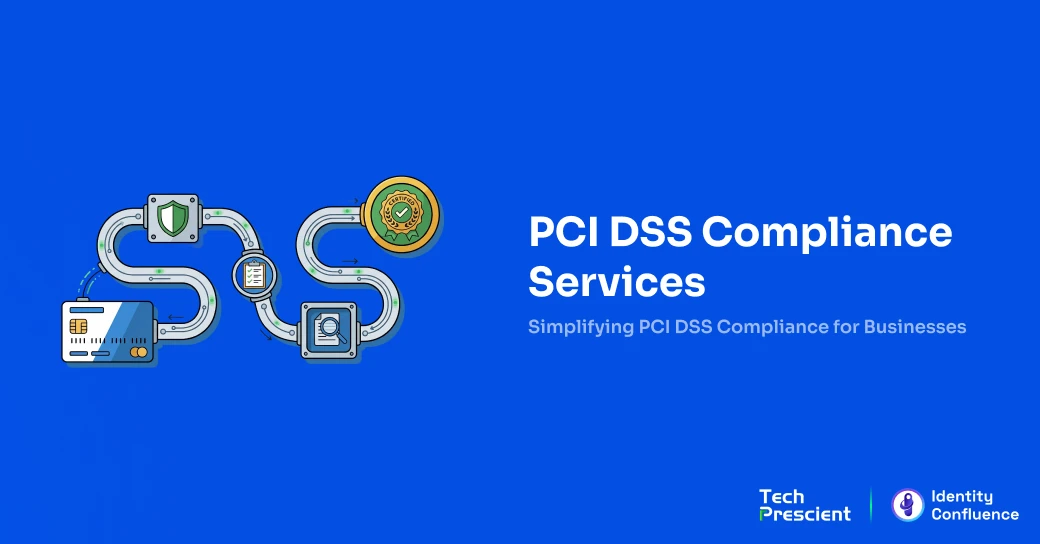
Key Takeaways:
- PCI DSS compliance services help organizations secure cardholder data and meet payment security requirements.
- Effective PCI compliance includes assessment, remediation, testing, validation, and continuous monitoring.
- The PCI DSS compliance process follows a structured path from gap analysis to certification and ongoing maintenance.
- Compliance costs vary based on business size, scope, and the level of assessment required.
- Choosing the right compliance provider can simplify audits, reduce risk, and accelerate compliance readiness.
What Are PCI DSS Compliance Services?
PCI DSS compliance services are specialized consulting, assessment, implementation, and audit support services that help organizations meet the requirements of the Payment Card Industry Data Security Standard (PCI DSS). These services guide businesses through the entire compliance lifecycle, from identifying security gaps and implementing controls to validating compliance and maintaining ongoing protection of cardholder data.
To help organizations achieve and sustain compliance, PCI DSS compliance services typically include the following key areas:
1. PCI DSS Assessment and Gap Analysis
The first step is understanding an organization's current compliance posture. Consultants evaluate existing security controls, policies, and processes against PCI DSS requirements to identify gaps and areas that need remediation. This assessment also helps define the scope of the cardholder data environment (CDE), which is critical for reducing compliance complexity.
2. PCI DSS Implementation and Remediation
Once gaps are identified, organizations must implement the necessary technical and administrative controls. This may include strengthening network security, encrypting sensitive data, enforcing multi-factor authentication (MFA), improving access controls, and updating security policies to align with PCI DSS requirements.
3. Audit Preparation and Compliance Validation
Compliance validation requires organizations to demonstrate that required controls are operating effectively. Depending on the organization's transaction volume and merchant level, this may involve completing a Self-Assessment Questionnaire (SAQ) or undergoing a formal assessment that results in a Report on Compliance (ROC). Service providers help gather evidence, prepare documentation, and streamline the audit process.
4. Security Testing and Monitoring
PCI DSS requires regular security testing to identify vulnerabilities before attackers can exploit them. Compliance services often include ASV vulnerability scanning, penetration testing, log monitoring, and continuous security assessments to ensure controls remain effective throughout the year.
5. Ongoing Compliance Management
PCI DSS is not a one-time project but an ongoing commitment. Many organizations rely on managed compliance services to continuously monitor controls, track regulatory changes, support annual assessments, and maintain compliance as their technology environment evolves.
Why PCI DSS Compliance Is Important for Businesses
PCI DSS compliance helps organizations protect cardholder data, reduce security risks, and maintain secure payment operations. Beyond meeting industry requirements, it plays a vital role in preventing breaches, avoiding financial consequences, and building customer trust.
The importance of PCI DSS compliance extends across several key areas:
1. Reduces the Risk of Payment Data Breaches
Cybercriminals frequently target organizations that process payment card information. PCI DSS helps businesses establish a strong security foundation through requirements such as network segmentation, access controls, encryption, vulnerability management, and continuous monitoring. These controls significantly reduce the likelihood of cardholder data being exposed or compromised.
2. Helps Avoid Financial Penalties and Additional Costs
Failure to comply with PCI DSS can result in substantial penalties imposed by payment card brands and acquiring banks. Depending on the severity and duration of non-compliance, organizations may face monthly fines, increased transaction fees, mandatory forensic investigations, and the costs associated with incident response and remediation. Investing in PCI DSS security compliance services can often be far less expensive than recovering from a payment data breach.
3. Protects Brand Reputation and Customer Trust
Customers expect businesses to handle their payment information responsibly. A security incident involving cardholder data can quickly damage a company's reputation, erode customer confidence, and lead to lost business opportunities. Demonstrating PCI DSS compliance signals a commitment to protecting sensitive information and maintaining secure payment experiences.
4. Supports Legal and Regulatory Obligations
Although PCI DSS is not a government regulation, compliance often supports broader legal and regulatory requirements related to data protection and cybersecurity. Organizations that fail to adequately secure payment data may face contractual disputes, legal action, and increased scrutiny from regulators following a breach.
5. Strengthens Business Continuity and Operational Resilience
A payment data breach can disrupt critical business operations, resulting in downtime, revenue loss, and resource-intensive recovery efforts. By implementing PCI DSS requirements, organizations can improve their overall security posture, minimize operational disruptions, and ensure payment systems remain available and secure.
Ultimately, PCI DSS compliance helps businesses move beyond basic compliance requirements and establish a stronger, more resilient security framework that protects customers, supports growth, and reduces long-term risk.
Key Components of PCI DSS Compliance Services
PCI DSS compliance services combine assessment, validation, security testing, remediation, and ongoing oversight to help organizations meet payment security requirements. Together, these services create a structured approach for protecting cardholder data and maintaining compliance over time.
Risk Assessment and Gap Analysis
Every compliance initiative begins with understanding the current state of security controls. A gap analysis compares existing practices against PCI DSS requirements to identify areas of non-compliance and prioritize remediation efforts. It also helps organizations accurately define their Cardholder Data Environment (CDE), ensuring compliance activities are focused on systems that handle payment data.
QSA Assessment and Audit Support
Qualified Security Assessors (QSAs) play a critical role in validating PCI DSS compliance. They evaluate security controls, review evidence, and help organizations prepare for formal assessments. Depending on the merchant level and transaction volume, businesses may complete a Self-Assessment Questionnaire (SAQ) or undergo a more comprehensive Report on Compliance (ROC) review.
Vulnerability Scanning (ASV)
PCI DSS requires regular external vulnerability scans to identify weaknesses that could expose cardholder data. These scans are conducted by Approved Scanning Vendors (ASVs), who assess internet-facing systems and provide reports that help organizations address security vulnerabilities before they can be exploited.
Penetration Testing
Penetration testing goes beyond automated scanning by simulating real-world attack scenarios. Security professionals test applications, networks, and critical systems to uncover vulnerabilities, validate existing defenses, and determine how effectively the organization can withstand potential cyberattacks.
Remediation and Control Implementation
Once security gaps are identified, organizations must implement corrective measures to align with PCI DSS requirements. This may involve strengthening firewall configurations, encrypting sensitive data, enforcing multi-factor authentication (MFA), tightening access controls, and improving security policies and procedures across the environment.
Continuous Monitoring and Compliance Support
PCI DSS compliance is an ongoing process rather than a one-time assessment. Continuous monitoring helps organizations track security events, validate control effectiveness, maintain audit evidence, and address emerging risks. Ongoing compliance support ensures that security controls remain aligned with evolving PCI DSS requirements and business changes.
PCI DSS Compliance Process (Step-by-Step)
PCI DSS compliance is not achieved through a single audit or assessment. It follows a structured process that helps organizations identify risks, implement security controls, validate compliance, and maintain ongoing protection of cardholder data. While the exact approach may vary based on business size and PCI merchant level, the core lifecycle remains largely the same.
Step 1: Assess Your Current Compliance Posture
The process begins with a detailed assessment of existing security controls, policies, and procedures. Organizations compare their current environment against PCI DSS requirements to identify compliance gaps, security weaknesses, and areas that require improvement.
Step 2: Define the Cardholder Data Environment (CDE)
Once the assessment is complete, organizations must determine which systems, applications, networks, and processes store, process, or transmit payment card data. Properly defining the Cardholder Data Environment (CDE) helps reduce audit scope and ensures compliance efforts focus on the systems that matter most.
Step 3: Remediate Identified Gaps
After the scope is established, organizations address the findings uncovered during the assessment phase. This may involve implementing stronger access controls, improving encryption practices, deploying multi-factor authentication (MFA), updating security policies, or strengthening network defenses to align with PCI DSS requirements.
Step 4: Validate Compliance
The next step is to verify that all required controls are in place and operating effectively. Depending on transaction volume and compliance level, organizations may complete a Self-Assessment Questionnaire (SAQ) or undergo a formal assessment conducted by a Qualified Security Assessor (QSA), resulting in a Report on Compliance (ROC).
Step 5: Achieve Compliance Certification
Once validation requirements have been met, organizations can submit the necessary documentation to their acquiring bank or payment processor. This demonstrates that PCI DSS requirements have been satisfied and confirms compliance status for the applicable assessment period.
Step 6: Monitor and Maintain Compliance
PCI DSS compliance is an ongoing responsibility. Organizations must continuously monitor security controls, conduct regular vulnerability scans and penetration tests, review access permissions, and maintain audit evidence to ensure continued compliance as systems, users, and business requirements evolve.
Pro Tip
Many organizations focus heavily on the validation stage but overlook scoping. Accurately defining the Cardholder Data Environment (CDE) early in the process can significantly reduce compliance effort, audit complexity, and long-term costs.
Not sure how your organization measures up against the 12 PCI DSS 4.0 requirements?
Assess control maturity, identify compliance gaps, and build a clear path to audit readiness.
Types of PCI DSS Compliance Services
Organizations have different compliance needs depending on their size, transaction volume, and security maturity. As a result, PCI DSS compliance services are available in several forms, ranging from strategic consulting and managed compliance programs to formal audit and validation services.
1. PCI DSS Assessment and Consulting Services
PCI DSS compliance assessment consulting services help organizations understand their current compliance posture and identify gaps that need to be addressed. Consultants provide guidance on PCI DSS requirements, define the scope of the Cardholder Data Environment (CDE), recommend remediation strategies, and help organizations build a roadmap toward compliance.
2. PCI DSS Compliance Management Services
For organizations that require ongoing support, PCI DSS compliance management services provide continuous oversight of compliance activities. These services may include compliance tracking, policy management, security monitoring, evidence collection, vulnerability management, and periodic reviews to ensure controls remain effective throughout the year.
3. Audit and Certification Services
Audit-focused services help organizations prepare for and complete PCI DSS validation requirements. Depending on the applicable merchant level, this may involve assistance with Self-Assessment Questionnaires (SAQs), Report on Compliance (ROC) assessments, audit documentation, evidence gathering, and coordination with Qualified Security Assessors (QSAs).
4. Industry-Specific PCI DSS Services
Certain industries face unique payment security challenges that require specialized compliance support. E-commerce businesses, payment processors, fintech companies, retail organizations, and financial institutions often benefit from tailored PCI DSS services that address industry-specific risks, technologies, and regulatory requirements.
Selecting the right type of PCI DSS compliance service depends on your organization's environment, compliance obligations, and internal resources. Many businesses combine consulting, compliance management, and audit support services to build a more effective and sustainable compliance program.
Did You Know?
Organizations that treat PCI DSS as an ongoing security program rather than an annual audit exercise are often better positioned to maintain compliance and reduce payment security risks year-round.
Who Needs PCI DSS Compliance Services?
Any organization that stores, processes, or transmits payment card information is responsible for complying with PCI DSS requirements. While compliance obligations vary based on transaction volume and business type, PCI DSS compliance services can help organizations manage security risks, simplify validation, and maintain ongoing compliance.
1. E-commerce Businesses
Online retailers handle payment card data through websites, shopping carts, and payment gateways, making them frequent targets for cyberattacks. PCI DSS compliance services help secure online transactions, protect customer payment information, and reduce the risk of data breaches.
2. SaaS and Subscription-Based Platforms
Many SaaS providers process recurring payments or integrate with payment processing systems. Compliance services help these organizations secure payment workflows, manage access controls, and ensure cardholder data is handled according to PCI DSS requirements.
3. Fintech Companies and Payment Gateways
Fintech organizations and payment service providers operate in highly regulated environments where payment security is critical. PCI DSS compliance services help strengthen security controls, support audit readiness, and protect sensitive transaction data across complex payment ecosystems.
4. Retail Businesses and Point-of-Sale (POS) Environments
Retailers that accept card payments through physical stores, self-service kiosks, or POS systems must secure cardholder data throughout the payment process. Compliance services help identify vulnerabilities, improve payment security controls, and support ongoing compliance efforts.
5. Banks and Financial Institutions
Banks, credit unions, and other financial institutions process large volumes of payment transactions and manage highly sensitive customer information. PCI DSS compliance services help these organizations maintain strong security controls, meet compliance obligations, and reduce exposure to payment-related threats.
Regardless of industry, if your organization is involved in handling payment card data in any capacity, PCI DSS compliance should be a key part of your cybersecurity and risk management strategy.
Quick Reality Check
Even if a third-party payment processor handles most transactions, your organization may still fall within PCI DSS scope depending on how cardholder data is collected, transmitted, or stored.
PCI DSS Compliance Cost Breakdown
The cost of PCI DSS compliance varies based on factors such as business size, transaction volume, environment complexity, and validation requirements. While smaller organizations may achieve compliance with relatively modest investments, larger enterprises often require more extensive assessments, testing, and remediation efforts.
Several factors influence the overall cost of achieving and maintaining PCI DSS compliance:
1. Small Businesses and SAQ-Based Compliance
Smaller merchants with limited payment processing environments may qualify for a Self-Assessment Questionnaire (SAQ) instead of a formal audit. Their PCI compliance certification cost is typically lower, as compliance activities are often limited to security assessments, vulnerability scans, policy reviews, and basic remediation efforts.
2. Enterprise Organizations and ROC Assessments
Organizations that process large transaction volumes or operate complex payment environments generally require a Report on Compliance (ROC) conducted by a Qualified Security Assessor (QSA). These assessments involve detailed reviews of security controls, documentation, testing procedures, and audit evidence, making them more resource-intensive and costly.
3. Scope of the Cardholder Data Environment (CDE)
The number of systems, applications, and networks that store, process, or transmit cardholder data directly impacts compliance costs. A larger Cardholder Data Environment (CDE) typically requires more extensive assessments, testing, and ongoing monitoring.
4. Infrastructure Complexity
Organizations with hybrid environments, multiple business locations, cloud-based payment systems, or numerous third-party integrations often face higher compliance costs. More complex infrastructures require additional security reviews, documentation, and validation activities.
5. Security Maturity
Businesses with mature cybersecurity programs are generally better positioned for PCI DSS compliance. Existing controls such as encryption, access management, vulnerability management, and continuous monitoring can reduce remediation efforts and accelerate the compliance process.
6. Ongoing Compliance and Monitoring Requirements
Achieving compliance is only part of the investment. Organizations must also budget for recurring activities such as ASV vulnerability scans, penetration testing, policy reviews, employee training, compliance assessments, and continuous monitoring to maintain compliance throughout the year.
Ultimately, PCI DSS compliance should be viewed as an investment in payment security and risk reduction. Organizations that proactively strengthen their security posture often reduce long-term compliance costs while improving protection for cardholder data.
Can You Do PCI Compliance Yourself?
Whether you can manage PCI DSS compliance internally depends on the size and complexity of your payment environment. While some small businesses can complete compliance activities on their own, organizations with larger infrastructures, multiple payment channels, or complex cardholder data environments often benefit from expert guidance.
Before deciding on a DIY approach, it's important to understand the differences between self-assessment and professional compliance support.
1. DIY PCI Compliance vs. QSA-Led Compliance
Organizations with simple payment environments may be eligible to complete a Self-Assessment Questionnaire (SAQ) and manage compliance internally. This approach can work well when payment processing is limited, the Cardholder Data Environment (CDE) is small, and internal teams have a strong understanding of PCI DSS requirements.
A Qualified Security Assessor (QSA), on the other hand, provides independent expertise, conducts detailed assessments, validates security controls, and helps organizations navigate complex compliance requirements. QSA support is often necessary for businesses that require a Report on Compliance (ROC) or operate in highly regulated environments.
2. Risks of Self-Compliance
Managing PCI DSS compliance without external expertise can create challenges, particularly when interpreting requirements or defining compliance scope. Organizations may overlook security gaps, underestimate the size of the Cardholder Data Environment, or fail to maintain the documentation and evidence needed during audits.
Even when compliance appears complete on paper, gaps in implementation or testing can increase the risk of non-compliance, audit findings, and potential security incidents.
3. When Should You Hire PCI DSS Experts?
Professional PCI DSS compliance services are often valuable when organizations have complex infrastructures, process large transaction volumes, operate across multiple locations, or need to complete a formal ROC assessment. Expert support can also help accelerate remediation efforts, simplify audits, and ensure security controls align with PCI DSS requirements.
If your team lacks dedicated PCI expertise or is struggling with compliance readiness, working with experienced consultants or QSAs can reduce risk and provide greater confidence throughout the compliance process.
Turn your PCI DSS checklist into an actionable compliance plan.
Evaluate readiness, prioritize remediation efforts, and prepare for successful assessments.
How to Choose the Best PCI DSS Compliance Service Provider
Selecting the right PCI DSS compliance partner can make the difference between a smooth compliance journey and a lengthy, resource-intensive process. The best PCI DSS compliance services combine technical expertise, compliance knowledge, and ongoing support to help organizations reduce risk and achieve compliance more efficiently.
When evaluating providers, consider the following factors:
QSA Credentials and PCI Expertise
A strong provider should have deep knowledge of PCI DSS requirements and access to Qualified Security Assessors (QSAs) when needed. Experienced PCI professionals can help interpret requirements, validate controls, and guide organizations through complex assessment and audit processes.
Industry Experience
Different industries face different payment security challenges. Whether you operate in retail, e-commerce, fintech, SaaS, or financial services, look for a provider with experience supporting organizations that handle payment data in environments similar to yours.
End-to-End Compliance Services
The most effective providers offer more than just assessments. Look for organizations that can support gap analysis, remediation planning, vulnerability management, penetration testing, audit preparation, compliance validation, and ongoing compliance management throughout the PCI lifecycle.
Automation and Compliance Management Capabilities
Managing PCI DSS requirements manually can be time-consuming and error-prone. Providers that leverage automation for evidence collection, compliance tracking, reporting, access reviews, and control monitoring can help reduce administrative effort while improving compliance visibility.
Global Reach and Ongoing Support
Organizations operating across multiple regions often require consistent compliance support regardless of location. Whether evaluating PCI DSS compliance services India, top PCI DSS compliance services in the USA, or global providers, consider their ability to support distributed teams, multiple business units, and evolving compliance requirements.
Ability to Support Long-Term Compliance
PCI DSS compliance is not a one-time project. The right provider should help maintain compliance through continuous monitoring, periodic assessments, security testing, and ongoing advisory services as your business and payment environment evolve.
Ultimately, the best PCI DSS compliance services align with your business objectives, security requirements, and compliance obligations. A provider that combines technical expertise, industry knowledge, and long-term support can help simplify compliance while strengthening overall payment security.
Benefits of PCI DSS Compliance Services
PCI DSS compliance services do more than help organizations satisfy compliance requirements. They strengthen payment security, improve operational resilience, and provide the expertise needed to protect cardholder data in an increasingly complex threat landscape.
Organizations that invest in PCI DSS compliance services can benefit in several ways:
1. Strengthens Cardholder Data Protection
PCI DSS compliance services help organizations implement security controls that safeguard sensitive payment information throughout its lifecycle. From encryption and access controls to network security measures, these controls reduce the likelihood of unauthorized access to cardholder data.
2. Minimizes the Risk of Security Incidents
Regular assessments, vulnerability scanning, penetration testing, and continuous monitoring help identify and address security weaknesses before they can be exploited. This proactive approach reduces the likelihood of data breaches and payment-related cyberattacks.
3. Helps Avoid Compliance Penalties
Non-compliance can lead to fines, increased transaction fees, mandatory investigations, and additional remediation costs. PCI DSS compliance services help organizations maintain compliance requirements and reduce the financial risks associated with security and audit failures.
4. Enhances Customer Confidence
Consumers expect businesses to protect their payment information. Demonstrating a commitment to PCI DSS compliance can reinforce trust, strengthen brand credibility, and provide customers with greater confidence when conducting transactions.
5. Improves Overall Security Maturity
Many of the controls required by PCI DSS align with broader cybersecurity best practices. By implementing these controls, organizations can strengthen governance, improve visibility into security risks, and establish a more mature and sustainable security program.
Ultimately, PCI DSS compliance services provide value beyond compliance itself. They help organizations build a stronger security foundation while supporting secure, reliable, and compliant payment operations.
PCI DSS Compliance vs Other Security Frameworks
PCI DSS is specifically designed to protect payment card data, but it does not operate in isolation. Many organizations implement PCI DSS alongside broader security and compliance frameworks to strengthen governance, reduce risk, and create a more comprehensive cybersecurity program.
While each framework serves a different purpose, they often share common security principles and controls.
1. PCI DSS vs ISO 27001
PCI DSS focuses on securing cardholder data and payment environments, whereas ISO 27001 provides a broader framework for establishing and managing an Information Security Management System (ISMS). Organizations that comply with ISO 27001 often have a strong foundation for implementing many PCI DSS security controls, although PCI DSS includes additional payment-specific requirements.
2. PCI DSS vs GDPR
The General Data Protection Regulation (GDPR) is centered on protecting personal data and privacy rights, while PCI DSS focuses specifically on payment card security. Organizations that process payment information belonging to individuals may need to comply with both frameworks. Controls such as data protection, access management, monitoring, and incident response often support requirements across both standards.
3. PCI DSS and Zero Trust Security
Zero Trust is a security model based on the principle of "never trust, always verify." While PCI DSS defines specific security requirements, Zero Trust provides an architectural approach for enforcing access controls, continuously verifying identities, and limiting unauthorized access to sensitive systems. Together, they help strengthen protection for cardholder data environments.
4. The Role of Identity Governance in PCI DSS Compliance
Identity Governance and Administration (IGA) plays an important role in supporting PCI DSS requirements. Organizations must ensure that users have appropriate access to systems containing payment data, review permissions regularly, enforce segregation of duties, and promptly remove unnecessary access. Automated identity governance solutions help simplify access reviews, strengthen compliance reporting, and support least-privilege access across the organization.
5. Building a Broader Compliance Strategy
Rather than treating PCI DSS as a standalone initiative, many organizations integrate it into a broader compliance and cybersecurity strategy. Aligning PCI DSS with frameworks such as ISO 27001, GDPR, and Zero Trust enables businesses to streamline compliance efforts, reduce duplicate controls, and improve overall security effectiveness.
Ultimately, PCI DSS is one piece of a larger security and governance framework. When combined with complementary standards and strong identity governance practices, it helps organizations build a more resilient and compliant security posture.
Final Thoughts
PCI DSS compliance services provide the expertise, assessment, remediation, and ongoing support organizations need to protect cardholder data and meet payment security requirements. By combining security best practices with structured compliance processes, businesses can reduce risk, streamline audits, and maintain continuous compliance as their environments evolve.
Tech Prescient helps organizations strengthen identity governance, automate access controls, enforce least-privilege policies, and simplify compliance reporting to support PCI DSS requirements across complex hybrid and multi-cloud environments.
FAQs
PCI compliance services help organizations meet the requirements of the Payment Card Industry Data Security Standard (PCI DSS). These services typically include gap assessments, security testing, remediation support, compliance validation, and audit preparation. Their goal is to help businesses protect cardholder data and maintain compliance with payment security standards.
The cost of PCI DSS compliance varies depending on factors such as business size, transaction volume, infrastructure complexity, and validation requirements. Small businesses completing a Self-Assessment Questionnaire (SAQ) may spend a few thousand dollars, while large enterprises undergoing a Report on Compliance (ROC) assessment can incur significantly higher costs. Ongoing security testing, remediation, and monitoring can also impact the overall investment.
In some cases, yes. Smaller organizations with simple payment environments may be eligible to complete an SAQ and manage compliance internally. However, businesses with complex networks, multiple payment channels, or higher transaction volumes often benefit from working with Qualified Security Assessors (QSAs) and compliance experts to reduce risk and ensure accurate validation.
Achieving PCI DSS compliance starts with assessing your current security controls against PCI DSS requirements. Organizations then remediate identified gaps, perform required security testing, validate compliance through an SAQ or ROC, and establish ongoing monitoring processes. Compliance should be treated as a continuous effort rather than a one-time project.
Any organization that stores, processes, or transmits payment card data must comply with PCI DSS requirements. This includes retailers, e-commerce businesses, SaaS providers, payment processors, financial institutions, and service providers that handle cardholder information. Compliance obligations apply regardless of business size or transaction volume.
Share



Yatin Laygude
Content Writer
A content writer with 6 years of experience turning complex topics into clear, engaging, and meaningful content. From blogs and web pages to whitepapers and thought pieces, he creates content that not only explains but also connects with both the audience and business goals.
Most Popular Blogs
Identity Security· 21 min read
Data Access Governance Solutions: How to Secure Sensitive Data at Scale
Compare data access governance solutions for 2026: how DAG platforms discover sensitive data, run access reviews, automate remediation, and prove compliance.
Brinda Bhatt· September 7, 2026
Identity Security· 24 min read
What Is Zero Trust Network Access (ZTNA)?
Learn what Zero Trust Network Access (ZTNA) is, how it works, and why it’s replacing VPNs for secure, identity-based access control.
Yatin Laygude· August 14, 2026
Identity Security· 24 min read
Cyber Essentials Certification: Complete Guide
Learn Cyber Essentials certification, cost, requirements, and steps. Compare Cyber Essentials vs Plus and get certified faster.
Yatin Laygude· August 10, 2026